
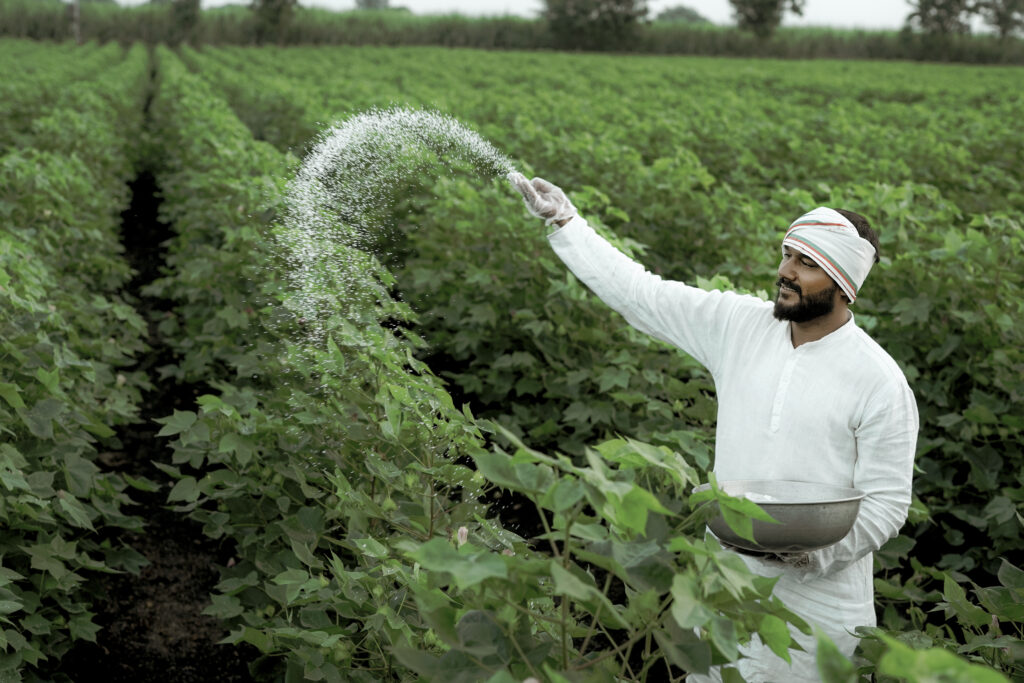
Indian farmers are under more pressure than ever to produce better crops at lower input costs. Fertiliser prices have risen significantly over the last few years, water availability is becoming less predictable across many states, and labour costs continue to climb every season. In this environment, any farming practice that improves fertiliser efficiency, reduces water waste, and cuts the number of field operations required is worth serious attention. Fertigation is one of those practices, and it is quietly transforming the economics of crop production for farmers across India who have made the switch. Floral Designs supplies the complete range of Compo Expert Germany water soluble and liquid fertilisers that are designed specifically for fertigation systems, giving Indian farmers the right products to get the most out of every drop of water and every rupee spent on crop nutrition.
What Is Fertigation and How Does It Work
Fertigation is the practice of dissolving fertilisers into irrigation water and delivering them to the crop through a drip or sprinkler irrigation system. Instead of applying fertiliser separately from irrigation as a granular top dressing or foliar spray, fertigation combines both operations into one, saving time, labour, and the cost of separate application passes across the field.
The fertiliser is mixed into the irrigation water at the water source using an injector or venturi system, and the nutrient solution travels through the drip lines to be delivered directly to the root zone of each plant. Because the nutrients arrive at the root zone already dissolved in water, they are immediately available for plant uptake without the dissolution delays and soil fixation losses that granular fertilisers applied to the soil surface suffer from.
The result is a more efficient nutrient delivery system that puts more of what the farmer pays for directly into the crop, rather than losing it to the environment through leaching, volatilisation, or soil chemical fixation.
The Cost Reduction Case for Fertigation
The financial case for fertigation in Indian farming is built on several compounding efficiency gains that add up to a significant reduction in total input cost per season.
The first gain is fertiliser use efficiency. Research consistently shows that fertigation delivers nutrients to the plant with significantly higher efficiency than conventional broadcast or band application of granular fertilisers. When a farmer switches from broadcasting urea to applying nitrogen through a drip system, the proportion of applied nitrogen actually absorbed by the crop increases substantially. This means the farmer can achieve the same crop nutrition outcome with a lower total quantity of fertiliser, directly reducing the fertiliser cost per hectare per season.
The second gain is labour reduction. A conventional fertiliser programme for most Indian crops involves multiple separate application events across the season, each requiring labour for spreading, post-application irrigation scheduling, and crop monitoring. Fertigation integrates fertiliser delivery into the irrigation cycle, eliminating separate fertiliser application operations and reducing the total labour requirement for crop nutrition management across the season.
The third gain is water use efficiency. Because fertigation delivers water and nutrients simultaneously to the root zone of each plant, it eliminates the surface runoff and deep percolation losses associated with flood and furrow irrigation. Farmers who shift from flood irrigation to drip fertigation typically see a 30 to 50 percent reduction in total water use while maintaining or improving crop performance.
The Yield Improvement Case for Fertigation
Beyond cost reduction, fertigation consistently improves crop yields and quality when implemented correctly. The mechanism behind this improvement is straightforward. A crop that receives the right nutrients at the right time in a form it can immediately absorb performs better than a crop that receives the same total nutrient quantity through a less efficient delivery method.
Fertigation allows the farmer to split fertiliser applications into multiple small, frequent doses across the season rather than applying the full nutrient requirement in two or three large doses. This split application approach keeps nutrient concentrations in the root zone at optimal levels for plant uptake throughout the growing season, avoiding the feast and famine cycle that conventional top dressing creates.
The ability to adjust nutrient ratios through the drip system at different growth stages is another yield driver. During vegetative growth, the fertigation programme can be weighted toward nitrogen. At flowering, phosphorus can be increased through the drip line. During fruit development, potassium can be pushed higher. This stage-specific adjustment mirrors the crop’s actual nutritional demand across the season and drives better performance at every phase of development.
The Right Fertilisers for Fertigation Systems
Not every fertiliser is suitable for fertigation. Products used in drip systems must be completely water soluble, must not block emitters or drip lines, and must be compatible with the irrigation water chemistry on the farm. This is where the Compo Expert Germany range available through Floral Designs delivers a clear advantage over generic market fertilisers.
Hydrospeed CaB Max is one of the most important fertigation products for Indian fruit and vegetable farmers. It delivers calcium and boron through the drip line directly to the root zone. Calcium is one of the least mobile nutrients in the plant and must arrive consistently at developing tissues through the transpiration stream. Drip-applied calcium through Hydrospeed CaB Max corrects and prevents calcium deficiency disorders including blossom end rot in tomato, tip burn in lettuce and cabbage, and fruit cracking in grapes and pomegranate far more effectively than soil-applied calcium sources.
Basafer Plus is the go-to fertigation product for iron deficiency correction on Indian farms. It provides chelated iron in EDDHA form, which remains stable and plant-available across the wide soil pH range found on Indian farms, including the highly alkaline and calcareous soils of Punjab, Haryana, Gujarat, and Maharashtra where iron chlorosis is a persistent seasonal problem. Applied through the drip system, it corrects iron deficiency from the root zone up, which is more effective than foliar iron applications alone on crops with dense canopies or severe deficiency.
Basfoliar Kelp O SL works through both foliar spray and drip fertigation, making it a flexible addition to any fertigation programme. This seaweed-based liquid fertiliser improves root development, enhances the crop’s natural stress tolerance, and increases overall nutrient uptake efficiency, which amplifies the benefit of every other product in the fertigation programme.
Basfoliar Avant Natur SL is an organic liquid fertiliser that supports soil microbial activity and plant health through the drip system. Adding it to the fertigation programme improves the root zone environment for better nutrient availability and supports the long-term soil health that sustained crop productivity depends on.
For spray grade products applied as foliar sprays alongside the drip fertigation programme, Basfoliar 13-40-13 SP at flowering and Basfoliar K WP during fruit development give targeted nutritional boosts at the stages where the crop needs them most, working in combination with the baseline nutrition delivered through the drip system.
Which Crops and Farming Systems Benefit Most from Fertigation
Fertigation delivers the greatest benefits in farming systems where drip irrigation is already installed or where the investment in drip infrastructure can be justified by the crop value. High-value fruit crops including grape, pomegranate, mango, banana, citrus, and strawberry are among the clearest candidates. Vegetable crops grown in polyhouses and open fields, including tomato, capsicum, cucumber, and leafy greens, also show strong yield and quality responses to well-managed fertigation programmes.
Row crops on large acreages are increasingly adopting drip fertigation as the economics of water scarcity and labour availability push farmers toward more efficient production systems. Sugarcane farmers in Maharashtra and Karnataka have seen significant yield improvements after switching from flood irrigation and broadcast fertilisation to drip fertigation programmes. Banana growers in Tamil Nadu and Gujarat have similarly reported better bunch weight, more uniform plant development, and lower fertiliser consumption after implementing fertigation.
For government resources and technical guidelines on setting up and managing fertigation systems for Indian crop conditions, the National Committee on Plasticulture Applications in Horticulture provides detailed technical support and subsidy information for drip irrigation and fertigation adoption across India.
Browse all Compo Expert Germany products suitable for fertigation and foliar application on the Floral Designs Shop. Learn more about the brand and its precision nutrition philosophy on the About Us page, and contact the team to get help designing a fertigation nutrition programme for your crop and farm setup.
Conclusion
Fertigation is not a technology reserved for large commercial farms. It is a practical, accessible upgrade for any Indian farmer using drip irrigation who wants to get more from their fertiliser investment, reduce water and labour costs, and deliver more consistent crop nutrition across the season. Floral Designs brings the complete range of Compo Expert Germany water soluble and liquid fertilisers to Indian farmers, covering every nutrient requirement from calcium and iron through to potassium and seaweed biostimulants. If you are already running drip irrigation on your farm, you have everything you need to start fertigating. The right products are waiting on the Floral Designs Shop.