
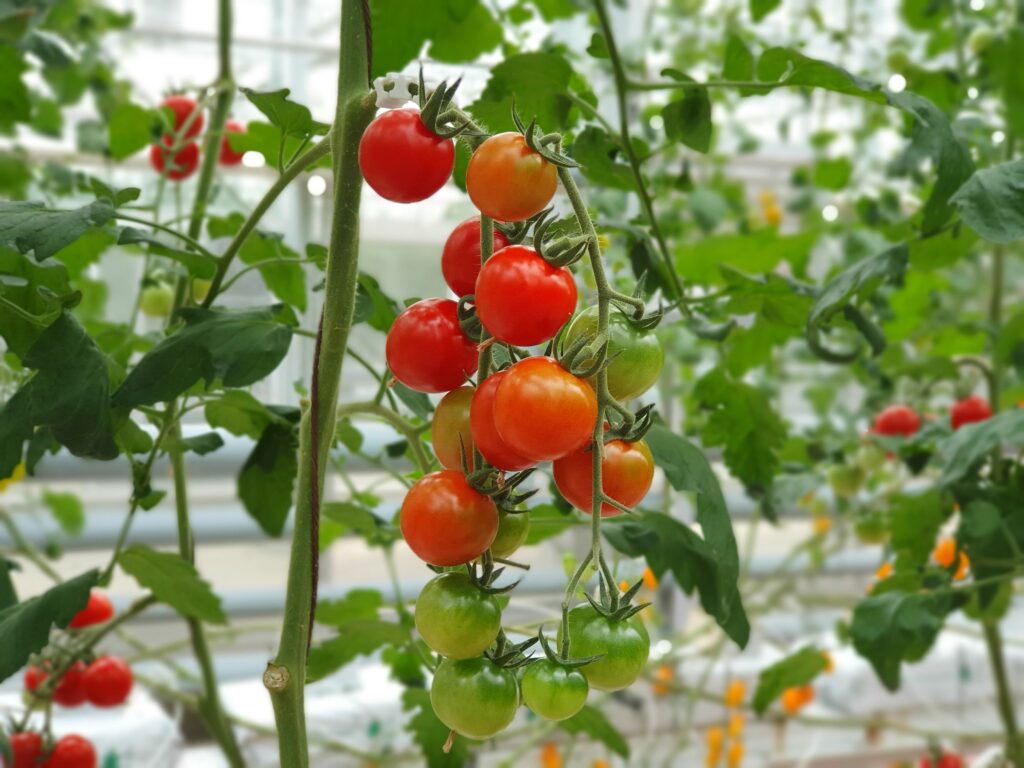
If you want to grow better tomatoes in India, the fertiliser programme is the single most important factor you can control. Tomato is one of the most nutrient-demanding vegetable crops grown across India. It grows fast, fruits heavily, and draws on soil nutrient reserves continuously from transplanting through to the final harvest pick. Most Indian tomato farmers apply urea and DAP at fixed intervals and then wonder why yields are inconsistent, fruit size is uneven, blossom end rot appears mid-season, and shelf life after harvest is poor. The answer is almost always the nutrition programme. Tomatoes need specific nutrients at specific stages of their development. And getting that right is what separates a productive tomato farm from a struggling one. Floral Designs brings the complete Basfoliar range from Compo Expert Germany to Indian tomato farmers. These are precision crop nutrition products that cover every nutritional requirement of the tomato crop from transplanting to final harvest.
What Tomatoes Need at Each Growth Stage
Before building a fertiliser programme, it helps to understand what the tomato plant actually needs at each stage of its development. Tomatoes go through four distinct nutritional phases. Each one has a different dominant nutrient requirement. And matching the fertiliser to each phase is the foundation of a programme that consistently delivers better results. At transplanting and early establishment, the priority is root development and recovery from transplant stress. Phosphorus and calcium dominate at this stage. They support root tip growth, build strong cell walls in young tissues, and help the plant establish quickly in the new growing environment. So getting these two nutrients into the root zone immediately after transplanting sets the crop up for a faster, stronger start. Then, through the vegetative phase, nitrogen drives canopy expansion. The tomato plant needs to build adequate leaf area before it can support a heavy fruit load. So balanced NPK nutrition keeps the plant growing evenly without pushing excessive vegetative growth that delays flowering. Furthermore, micronutrients including iron, zinc, and manganese support the enzyme systems and photosynthetic processes that power vegetative development. At flowering and fruit set, phosphorus becomes the dominant requirement again. Flower initiation, pollen viability, and successful fruit set all depend on adequate phosphorus at exactly the right moment. This is the stage that most tomato farmers get wrong. Because their phosphorus was applied early to the soil and has already been fixed before the crop reaches the reproductive phase. Finally, during fruit development and ripening, potassium takes over. It drives fruit sizing, colour development, sugar accumulation, lycopene production, and post-harvest shelf life. Calcium continues to be critical at this stage for preventing blossom end rot, one of the most common and costly disorders in Indian tomato production. So the final phase of the programme determines the commercial value of the entire crop.
Transplanting Stage: Start with Calcium and Balanced Nutrition
The first step to grow better tomatoes in India is to start calcium nutrition from day one. Most tomato farmers do not apply calcium until blossom end rot has already appeared. By that point, the damage is done. Prevention is far more effective than correction. And prevention starts at transplanting. Hydrospeed CaB Max from Compo Expert Germany delivers calcium and boron through the drip line in a fully water soluble form. Start running it through the drip system from the day of transplanting. Then continue through to the end of fruit development. As a result, developing fruit tissue receives a consistent calcium supply throughout the season. Cell walls stay strong. And blossom end rot is prevented before it can cause commercial damage. Furthermore, begin foliar sprays with Basfoliar 19-19-19 SP within the first week after transplanting. Its balanced nitrogen, phosphorus, and potassium ratio supports even early growth without stressing the freshly transplanted seedling. Apply it every 10 to 14 days through the vegetative phase. Additionally, add Basfoliar Kelp O SL to the first two or three sprays after transplanting. The natural auxins and cytokinins in this seaweed product stimulate new root growth and reduce transplant shock. So the crop establishes faster and enters the vegetative phase more quickly.
Vegetative Phase: Build a Strong Canopy Before Flowering
Through the vegetative phase, the goal is to build a strong, healthy canopy that can support a heavy fruit load through the reproductive stages ahead. So the nutrition programme at this stage should support even growth across the plant without pushing any single direction too hard. Continue Basfoliar 19-19-19 SP as the primary foliar spray every 10 to 14 days. Its balanced NPK ratio keeps the plant developing evenly without excessive vegetative growth. Furthermore, add Basfoliar Kelp O SL to alternate sprays through the vegetative phase. It improves nutrient uptake efficiency and builds the plant’s stress tolerance ahead of the demanding reproductive stages. On farms where iron deficiency is a known problem, yellowing between the leaf veins on young leaves is the clearest sign, start Basafer Plus through the drip system during the vegetative phase. Its EDDHA chelated iron stays stable in high pH soils where standard iron sulphate fails. So iron chlorosis is corrected from the root zone up. As a result, photosynthetic efficiency stays high through the vegetative phase and the plant builds a stronger energy base for the flowering and fruiting stages ahead.
Flowering Stage: Maximise Fruit Set with High Phosphorus Nutrition
The flowering stage is the most critical nutritional window in the entire tomato growing cycle. Getting the phosphorus timing right at this stage is the single most reliable way to grow better tomatoes in India with higher fruit set and more uniform crop development. Start Basfoliar 13-40-13 SP as the primary foliar spray one week before the first flowers are expected to open. Apply it two to three times through the flowering and early fruit set period. Its high phosphorus concentration drives flower initiation, improves pollen viability, and supports successful fertilisation. As a result, fruit set percentage improves and more flowers develop into marketable fruit compared to crops on a standard urea and DAP programme. Furthermore, continue Hydrospeed CaB Max through the drip line through the flowering stage. Boron in this product supports pollen tube elongation, the biological process by which pollen reaches the ovule to achieve fertilisation. So calcium and boron nutrition at flowering works alongside the high phosphorus foliar programme to maximise the percentage of flowers that successfully set fruit. Also continue Basfoliar Kelp O SL in alternate sprays through flowering. The natural plant growth regulators in seaweed extract support the hormonal signalling that drives successful reproductive development. So the seaweed biostimulant layer amplifies the effect of the high phosphorus foliar programme at the most critical stage of the tomato crop cycle.
Fruit Development Stage: Drive Size, Colour, and Quality
Once fruit set is confirmed and fruitlets begin to develop, the nutrition programme shifts to potassium as the primary driver of fruit quality. This is the stage where the commercial value of the crop is ultimately determined. So getting potassium nutrition right through fruit development is essential to grow better tomatoes in India that command strong prices in the fresh market. Introduce Basfoliar Fruit SP as the primary foliar spray once fruit set is confirmed. Its high potassium and phosphorus formulation drives fruit sizing, improves colour uniformity, increases lycopene and sugar content, and strengthens fruit skin to reduce cracking and post-harvest losses. Apply it every 10 to 14 days through the fruit development phase. As a result, fruit from treated crops is larger, more uniformly coloured, and firmer at harvest compared to crops on standard NPK programmes. Furthermore, introduce Basfoliar K WP into alternate sprays through the fruit development and pre-harvest stage. Its chloride-free potassium formulation delivers a clean potassium push without the chloride accumulation risk that standard potassium fertilisers carry. So tomato fruit gets the potassium it needs for sizing and ripening quality without the associated chloride stress. Continue Hydrospeed CaB Max through the drip line through the entire fruit development phase. Consistent calcium delivery to developing fruit tissue is the most reliable prevention for blossom end rot. So maintaining drip calcium through every irrigation cycle from fruit set to final harvest eliminates this disorder from the programme entirely on most farms where it has been a recurring problem.
The Complete Tomato Fertiliser Programme at a Glance
Building a complete programme to grow better tomatoes in India using the Basfoliar range from Compo Expert Germany is straightforward. Here is how the complete programme fits together across the full crop cycle. Step 1: At transplanting, start Hydrospeed CaB Max through the drip line and begin foliar sprays with Basfoliar 19-19-19 SP plus Basfoliar Kelp O SL for stress-free establishment. Step 2: Through the vegetative phase, continue Basfoliar 19-19-19 SP every 10 to 14 days with Basfoliar Kelp O SL in alternate sprays. Add Basafer Plus through drip on iron-deficient farms. Step 3: One week before flowering, switch the foliar spray to Basfoliar 13-40-13 SP and continue through early fruit set. Maintain drip calcium through Hydrospeed CaB Max and seaweed support through Basfoliar Kelp O SL. Step 4: Once fruit set is confirmed, introduce Basfoliar Fruit SP and Basfoliar K WP in alternate sprays. Continue drip calcium through to final harvest. So this four-step programme covers every nutritional requirement of the tomato crop from transplanting to harvest. Each product is chosen specifically for the stage where it delivers the greatest impact. And together they give Indian tomato farmers a complete, reliable nutrition system built on German precision agronomy. For detailed crop-specific nutrition guidelines and production technology recommendations for tomato farming in India, visit the National Horticulture Board of India which publishes research-backed agronomic guidance for all major vegetable crops grown across Indian states. Browse the complete Basfoliar range and all Compo Expert Germany products on the Floral Designs Shop. Learn more about the brand and its sourcing philosophy on the About Us page. And contact the team for personalised guidance on building a tomato nutrition programme for your specific growing conditions and target market.
Conclusion
To grow better tomatoes in India, you need the right fertiliser at the right crop stage in a form the plant can actually absorb and use. Urea and DAP alone cannot deliver this. They miss potassium at fruit development, miss calcium throughout the season, and miss the critical phosphorus window at flowering. The Basfoliar range from Compo Expert Germany covers every gap. From transplanting calcium support through to pre-harvest potassium quality nutrition, every stage of the tomato crop cycle is addressed with a purpose-built precision product. Floral Designs brings this complete range to Indian tomato farmers. So this season, stop guessing and start feeding your tomatoes with the precision they deserve.