
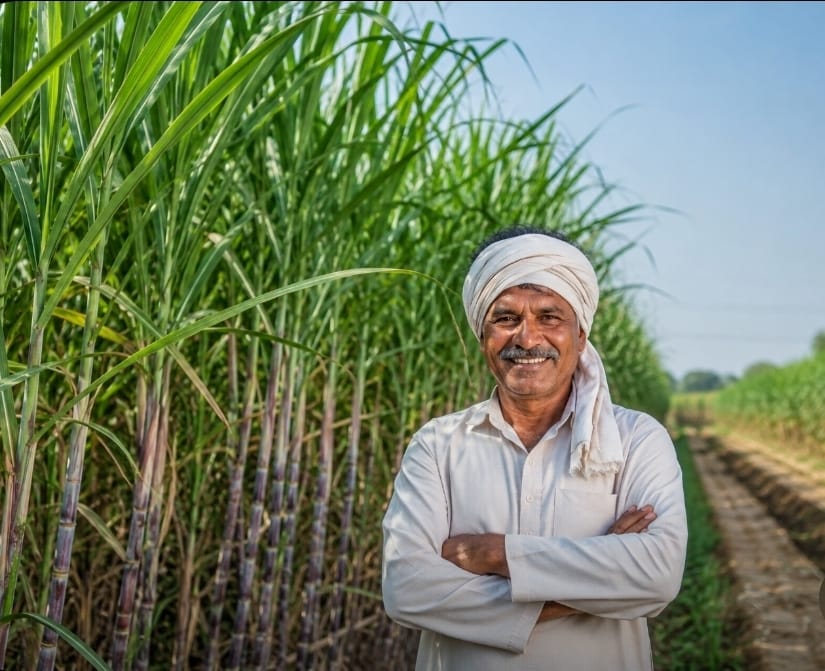
To improve sugarcane yield in India, the fertiliser programme is the most important controllable input on every sugarcane farm. India is the world’s second largest sugarcane producer. Yet cane yield per hectare and sugar recovery percentage remain significantly below potential on most Indian sugarcane farms. The gap between current farm performance and agronomic potential is not a land problem. It is not a water problem. It is almost always a nutrition problem. Most Indian sugarcane farmers apply urea and a basal complex fertiliser at fixed intervals through the season. But this approach misses potassium, calcium, zinc, iron, and several other nutrients that are critical for cane yield and sugar recovery. Furthermore, the timing and delivery method of conventional sugarcane fertilisation wastes a large proportion of what is applied before the plant can absorb it. To improve sugarcane yield in India requires a complete rethink of what is applied, when it is applied, and how it reaches the crop. Floral Designs brings the complete Basfoliar range from Compo Expert Germany to Indian sugarcane farmers. These are precision nutrition products that address every nutritional gap in the conventional sugarcane fertiliser programme.
Why Sugarcane Is One of the Most Nutritionally Demanding Crops in India
Sugarcane is a 12 to 18 month crop in most Indian growing regions. It has one of the highest biomass production rates of any agricultural crop. And every tonne of cane harvested removes large quantities of nitrogen, phosphorus, potassium, calcium, magnesium, sulphur, and micronutrients from the soil. So the total nutritional demand of a commercial sugarcane crop is enormous compared to most other Indian crops. Potassium is the nutrient that sugarcane removes in the greatest quantity. Research consistently shows that sugarcane removes more potassium per hectare than nitrogen across a full growing season. Yet most Indian sugarcane farmers apply far less potassium than the crop needs because the unsubsidised cost makes it feel optional. As a result, potassium deficiency is the most widespread nutritional problem in Indian sugarcane farming and a major driver of the sugar recovery percentage gaps that reduce mill revenue and farmer returns simultaneously. Furthermore, ratoon sugarcane, which is the crop grown from the stubble of the previous season, faces even greater nutritional pressure than plant cane. The root system of ratoon cane is smaller and less efficient than that of plant cane. So nutritional delivery through targeted foliar and drip application becomes even more important for ratoon crops. And the nutritional depletion left by the previous season’s crop means that micronutrient correction is a higher priority in ratoon crops than in plant cane programmes.
Germination and Early Growth: Establishing a Strong Foundation
The germination and early establishment phase of sugarcane is where the foundation of the entire season is built. Strong, uniform germination leads to better plant populations. And better plant populations lead to higher cane numbers per hectare at harvest. So getting the nutrition right at establishment pays dividends through every subsequent growth stage. Phosphorus is the most critical nutrient at germination and early establishment. It drives root development and energy transfer in germinating buds. So adequate phosphorus at the very start of the season supports faster germination, better root initiation, and more uniform early plant establishment across the field. Basacote High K 6M from Compo Expert Germany is an excellent basal fertiliser for sugarcane. Its six-month controlled release nutrition delivery provides consistent background potassium, nitrogen, and phosphorus nutrition through the long establishment and early vegetative phases. So the young cane plant has a reliable nutritional foundation from germination through to the active tillering stage without the nutrient flush and depletion cycle that conventional granular applications create. Furthermore, address zinc deficiency proactively at establishment on fields with known zinc deficiency history. Zinc deficiency is widespread in Indian sugarcane soils and shows as interveinal white streaking on young leaves in the early growth stages. It significantly reduces tillering and early growth. So correcting zinc before the crop shows symptoms is far more effective than applying zinc as a corrective treatment after the deficiency has already limited early season performance. Add Basfoliar Kelp O SL as a ratoon bud or sett treatment at planting on ratoon crops. The natural auxins in seaweed extract stimulate root initiation from the germinating bud. So ratoon germination is faster and more uniform. And the ratoon crop establishes a stronger root system from the very beginning of the season.
Tillering Stage: Building Maximum Cane Numbers for Higher Yield
The tillering stage in sugarcane is directly equivalent to the tillering stage in paddy in terms of its yield-determining importance. More tillers mean more canes per hectare at harvest. And more canes per hectare at harvest is the primary driver of higher total cane yield. So maximising tiller production through the active tillering phase is one of the most important ways to improve sugarcane yield in India. Nitrogen drives tiller production in sugarcane. But nitrogen alone without adequate potassium and phosphorus support produces weak, thin tillers that do not survive through to harvest. The ideal tillering stage programme delivers balanced NPK nutrition that supports tiller initiation and tiller survival simultaneously. Basfoliar 19-19-19 SP applied as a foliar spray every 10 to 14 days through the active tillering phase delivers balanced nitrogen, phosphorus, and potassium nutrition directly to the cane canopy. Furthermore, because it is a foliar spray, it delivers nutrition more efficiently than soil-applied fertilisers in the waterlogged and compacted soil conditions that are common in Indian sugarcane fields during the monsoon season. As a result, tiller numbers improve and tiller survival through to the grand growth phase is higher compared to crops on standard urea-only top dressing programmes. Add Basfoliar Kelp O SL to alternate foliar sprays through the tillering phase. The natural cytokinins in seaweed extract support cell division in developing tillers. So tiller initiation is stimulated and tiller survival is improved. As a result, the effective tiller count entering the grand growth phase is maximised. And on farms where iron deficiency is a problem, start Basafer Plus through the irrigation system during the tillering phase. Iron chlorosis on young sugarcane leaves reduces photosynthetic efficiency at the stage when the plant needs maximum energy for tiller development.
Grand Growth Phase: High Potassium Nutrition for Cane Elongation
The grand growth phase is where the sugarcane plant puts on the majority of its final cane height and stalk diameter. This is the phase that determines the total biomass of the crop at harvest. And potassium is the dominant nutritional driver of cane elongation, stalk diameter development, and the structural integrity of the cane that determines lodging resistance through the rest of the season. Potassium controls cell expansion in the developing internodes. So adequate potassium during the grand growth phase means longer internodes, taller canes, and greater stalk diameter. All of which translate directly into higher cane yield per hectare at harvest. Furthermore, potassium strengthens the cell walls in the cane stalk, making it more resistant to lodging under heavy rainfall and wind. Lodged cane is one of the most significant causes of harvest loss and quality deterioration in Indian sugarcane production. So potassium nutrition through the grand growth phase is a direct investment in protecting the yield that the season has built. Basfoliar Fruit SP is introduced as the primary foliar spray through the grand growth phase. Its high potassium and phosphorus formulation drives internodal elongation and supports the energy demands of rapid cane growth. Apply it every 10 to 14 days through the grand growth period. Furthermore, introduce Basfoliar K WP in alternate sprays through the grand growth and maturation phases. Its chloride-free potassium formulation delivers clean potassium nutrition without the chloride accumulation that standard muriate of potash creates in intensively farmed sugarcane soils. As a result, cane elongation is better, stalk diameter is larger, and total cane weight per hectare at harvest is higher.
Maturation Stage: Improving Sugar Recovery with the Right Nutrition
Sugar recovery percentage is the most commercially important quality parameter in Indian sugarcane farming. It determines how much sugar the mill extracts from each tonne of cane. And it directly determines the price the farmer receives for their crop. So the maturation stage nutrition programme, which directly influences juice sugar concentration, is one of the most important and most overlooked components of the sugarcane fertiliser programme. Potassium is the primary driver of sucrose accumulation in the maturing cane stalk. It controls the loading of sucrose from the leaves where it is produced into the stalk where it accumulates. So adequate potassium through the maturation phase means higher juice brix, better sugar recovery percentage, and higher mill payment per tonne of cane delivered. Continue Basfoliar K WP as the primary foliar spray through the maturation phase up to six weeks before harvest. Its chloride-free potassium formulation drives sucrose loading in the maturing cane without the chloride stress that standard potassium fertilisers create. As a result, juice brix improves, sugar recovery percentage at the mill increases, and the farmer receives better payment per tonne of cane delivered. Stop nitrogen applications completely in the maturation phase. High nitrogen at maturation suppresses sucrose accumulation by pushing the plant toward continued vegetative growth rather than sucrose storage in the stalk. So withdrawing nitrogen while maintaining potassium through the six weeks before harvest is the single most impactful nutritional adjustment available for improving sugar recovery percentage on Indian sugarcane farms. Furthermore, continue Hydrospeed CaB Max through the drip or irrigation system through the maturation phase on farms where calcium and boron deficiency is a known issue. Calcium strengthens the cell walls in the stalk that store the sucrose solution. And boron supports the phloem transport processes that move sucrose from source leaves into the stalk sink tissue. So maintaining calcium and boron nutrition through maturation supports better sucrose accumulation alongside the potassium programme.
The Complete Sugarcane Nutrition Programme at a Glance
To improve sugarcane yield in India, here is how the complete precision nutrition programme fits together using the Compo Expert Germany range from Floral Designs. Step 1: At planting or ratoon establishment, apply Basacote High K 6M as the basal controlled release application. Address zinc deficiency proactively on deficient fields. Apply Basfoliar Kelp O SL as a ratoon treatment for faster establishment. And start Basafer Plus through irrigation on iron-deficient fields. Step 2: Through the tillering phase, apply Basfoliar 19-19-19 SP as the primary foliar spray every 10 to 14 days. Add Basfoliar Kelp O SL to alternate sprays for tiller support and stress tolerance. Step 3: Through the grand growth phase, switch the primary foliar spray to Basfoliar Fruit SP. Introduce Basfoliar K WP in alternate sprays. And continue Hydrospeed CaB Max through drip or irrigation. Step 4: Through the maturation phase, continue Basfoliar K WP as the primary foliar spray up to six weeks before harvest. Stop nitrogen completely. And maintain calcium and boron through Hydrospeed CaB Max through the maturation phase. So this four-step programme addresses every major nutritional requirement of the sugarcane crop from germination through to pre-harvest maturation. Each product is chosen for the stage where it delivers the greatest impact on cane yield, stalk quality, and sugar recovery percentage. As a result, sugarcane farmers who follow this programme see stronger tillering, taller canes, better lodging resistance, higher cane yield per hectare, and improved sugar recovery percentage from the very first season of implementation. For detailed agronomic research on sugarcane nutrition and fertiliser management across Indian growing regions, visit the Indian Council of Agricultural Research which publishes extensive guidelines on integrated nutrient management for sugarcane across all major Indian cane growing states and soil types. Browse the complete Compo Expert Germany range on the Floral Designs Shop. Learn more about the brand and its sourcing philosophy on the About Us page. And contact the team for personalised guidance on building a sugarcane nutrition programme for your specific variety, soil type, and growing region.
Conclusion
To improve sugarcane yield in India, the answer is not more urea. It is a complete, stage-specific nutrition programme that delivers balanced NPK, adequate potassium for cane elongation and sugar recovery, consistent calcium and boron through the season, micronutrient correction where deficiencies are present, and seaweed biostimulant support for stress tolerance and uptake efficiency. The Compo Expert Germany range available through Floral Designs covers every one of these requirements with purpose-built precision products. So if your sugarcane farm is producing below its yield and sugar recovery potential, start with the nutrition programme. Fix every stage. And see what your crop can actually deliver when it has everything it needs at exactly the right time.