
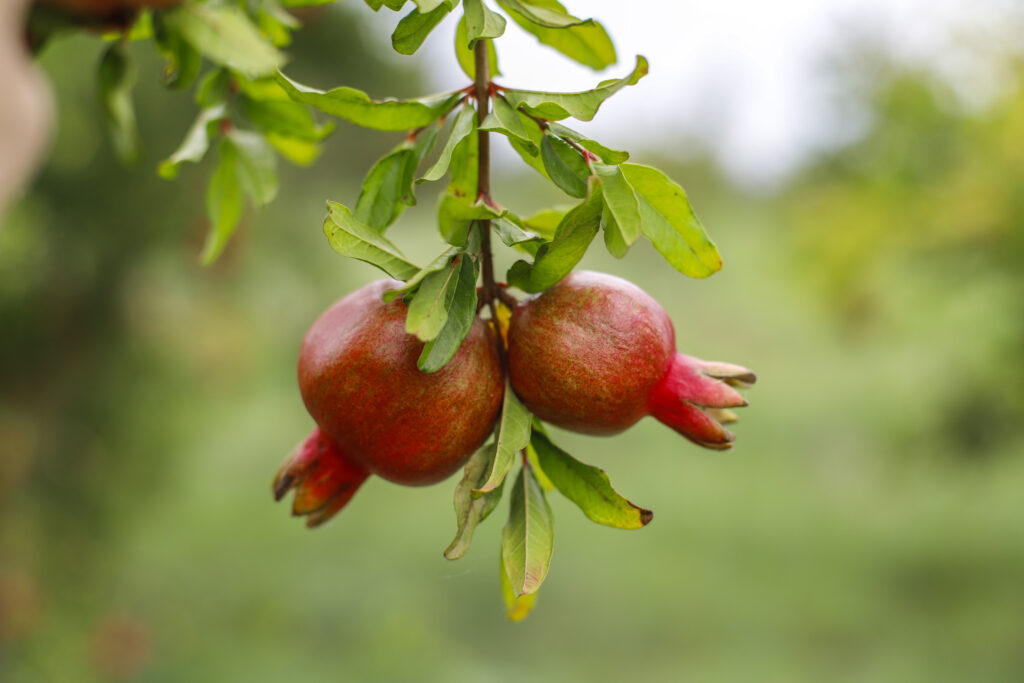
Pomegranate farmers in India are reducing fruit cracking and improving yields by addressing the nutritional root causes of these problems rather than simply reacting to them after they appear. Fruit cracking is the single most commercially damaging quality problem in Indian pomegranate production. It affects farms across Maharashtra, Karnataka, Andhra Pradesh, Rajasthan, and Gujarat every season. And it costs farmers enormous amounts of money in rejected fruit, lost export opportunities, and reduced market prices. Most farmers treat fruit cracking as a weather or irrigation problem. But the nutritional component is equally important and far more controllable. Furthermore, low yields, uneven colour development, and poor post-harvest shelf life are problems that also trace directly back to nutritional gaps in the crop programme. Floral Designs brings the complete Basfoliar range from Compo Expert Germany to pomegranate farmers in India. These are precision nutrition products that address the real causes of fruit cracking, colour problems, and yield gaps that the standard urea and DAP programme consistently fails to resolve.
Why Pomegranate Fruit Cracking Happens and What Nutrition Has to Do with It
Fruit cracking in pomegranate is commonly blamed on irregular irrigation or sudden rainfall after a dry period. And while these are contributing factors, they are not the underlying cause. The real cause is weak fruit skin cell walls that cannot withstand the internal pressure of rapidly expanding aril tissue. And the strength of fruit skin cell walls is directly determined by calcium nutrition during the fruit development phase. Calcium is the structural nutrient that binds cell wall components together and gives cell walls their rigidity and elasticity. When calcium levels in developing fruit skin tissue are adequate, the skin can expand evenly as the arils inside develop and fill with juice. But when calcium is deficient, cell walls are weak and brittle. So when the arils expand rapidly after irrigation or rainfall, the skin splits along the path of least resistance. As a result, fruit cracking is not just a weather event. It is a calcium deficiency event triggered by weather. Furthermore, boron deficiency compounds the problem. Boron controls the mobility of calcium within the plant. Without adequate boron, calcium cannot move efficiently from the root zone and stem into the developing fruit skin tissue where it is most needed. So a farm can have adequate soil calcium and still show severe fruit cracking if boron is limiting calcium transport to the fruit. This is why addressing calcium and boron together through the drip system is far more effective than applying calcium alone to the soil.
How Calcium and Boron Nutrition Prevents Fruit Cracking
The most reliable way to prevent fruit cracking in pomegranate is to deliver consistent calcium and boron nutrition directly to the root zone through the drip irrigation system throughout the fruit development phase. Soil-applied calcium sources are unreliable for this purpose because calcium moves slowly and unevenly through the soil profile. Foliar calcium is better than nothing but still limited by the plant’s ability to remobilise calcium from leaf tissue to fruit tissue, which is low. Drip application is the only method that delivers calcium consistently to the root zone with every irrigation cycle, maintaining a steady supply to developing fruit tissue throughout the entire fruit development period. Hydrospeed CaB Max from Compo Expert Germany is a fully water soluble calcium and boron fertiliser designed specifically for drip and drenching application. It delivers both calcium and boron directly to the root zone in immediately plant-available form. So the plant has a consistent supply of both nutrients throughout the fruit development phase without interruption. As a result, fruit skin cell walls develop with the structural strength needed to withstand the internal pressure of aril expansion after irrigation events and rainfall. Start Hydrospeed CaB Max through the drip line at fruit set. Then continue without interruption through to four weeks before harvest. Furthermore, do not stop calcium applications during the pre-harvest period when cracking risk is highest. Because it is precisely in the weeks before harvest, when arils are filling fastest and irrigation management is most critical, that calcium demand in the fruit skin is at its peak. So maintaining drip calcium through this period is the single most important nutritional intervention available to pomegranate farmers in India for reducing fruit cracking.
Potassium Nutrition: The Key to Better Colour and Higher Market Value
Fruit cracking is the most visible quality problem in Indian pomegranate production. But poor colour development is the most commercially limiting one for pomegranate farmers in India targeting export markets and premium domestic buyers. Pomegranate colour is determined primarily by anthocyanin pigment production in the fruit skin. And anthocyanin production is directly driven by potassium nutrition in the pre-harvest period. Farms that apply adequate potassium through the fruit development and pre-harvest stage consistently produce fruit with deeper, more uniform red colour compared to farms where potassium is underapplied or applied too late. Furthermore, potassium drives sugar accumulation in the arils. So higher potassium nutrition in the pre-harvest period also means sweeter fruit with higher brix readings at harvest, which directly improves buyer acceptance and market price. Basfoliar K WP is a chloride-free potassium schoenitte fertiliser designed for foliar application during fruit development and pre-harvest. Its chloride-free formulation is important for pomegranate because chloride accumulation in the root zone reduces fruit quality and creates long-term soil salinity problems. So Basfoliar K WP delivers the potassium push that colour development and sugar loading demand without the negative effects that standard potassium fertilisers create. Apply it as a foliar spray every 10 to 14 days from active fruit development through to four weeks before harvest. Then also introduce Basfoliar Fruit SP in alternate sprays through the same period. Its high potassium and phosphorus formulation drives both fruit sizing and colour development simultaneously. As a result, pomegranate farmers in India using this programme consistently report better colour grades, higher brix readings, and improved export grade percentages from their orchards.
Phosphorus Nutrition at Flowering: Maximising Fruit Set
Better colour and reduced cracking improve the quality of the fruit that sets. But maximising the number of fruit that set in the first place is equally important for improving total yield on pomegranate farms. And fruit set in pomegranate depends heavily on phosphorus nutrition at the flowering stage. Pomegranate has a prolonged flowering period with multiple flushes of flowers across several weeks. So the phosphorus nutrition window at flowering is wider than in mango or grape. But it is no less critical. Phosphorus drives the energy transfer processes that support flower development, pollen viability, and successful fertilisation at every flush of flowering through the season. Basfoliar 13-40-13 SP is the right product for the pomegranate flowering stage. Its high phosphorus formulation with supporting nitrogen and potassium delivers targeted reproductive stage nutrition as a foliar spray directly to the canopy. Apply it two to three times through each major flowering flush. As a result, fruit set percentage improves across each flush of flowers and the total number of commercial-grade fruit per tree at harvest increases. Furthermore, add Basfoliar Kelp O SL to the flowering stage spray programme. The natural plant growth regulators in this seaweed product support the hormonal signalling that drives successful flower development and fertilisation. So it amplifies the effect of the high phosphorus foliar programme at the flowering stage and improves fruit set percentage further. Apply it in alternate sprays throughout the flowering period alongside Basfoliar 13-40-13 SP.
Iron Deficiency: The Hidden Yield Limiter on Pomegranate Farms
Many pomegranate farmers in India grow their orchards on alkaline and calcareous soils, particularly in Maharashtra, Rajasthan, and Gujarat. These soil types are highly prone to iron deficiency. And iron deficiency on pomegranate farms is a significant but often overlooked yield limiter that reduces the effectiveness of the entire nutrition programme. Iron deficiency shows as interveinal chlorosis on young leaves. The tissue between the leaf veins turns yellow while the veins stay green. This symptom reduces photosynthetic efficiency significantly. So the plant produces less energy for shoot growth, flower development, fruit set, and fruit filling. As a result, iron-deficient pomegranate trees consistently produce fewer fruit, smaller fruit, and lower yields than trees with adequate iron nutrition even when NPK and calcium applications look correct on paper. Basafer Plus corrects iron deficiency through the drip system using EDDHA chelated iron that stays stable across the full Indian soil pH range. Apply it through the drip line during the vegetative phase and continue through the flowering period on orchards with known iron deficiency history. As a result, iron chlorosis is corrected from the root zone up. Leaf colour improves, photosynthetic efficiency is restored, and the plant has the energy it needs to support strong flowering, fruit set, and fruit development throughout the season.
Building the Complete Pomegranate Nutrition Programme
Pomegranate farmers in India who want to reduce fruit cracking and improve yields can build a complete programme using the Compo Expert Germany range from Floral Designs. Here is how the programme fits together across the full pomegranate crop cycle. Step 1: At the start of the season, apply Basacote High K 6M as the basal controlled release granular application. This provides six months of sustained background nutrition from a single application. So the tree has a consistent nutritional foundation through the vegetative and early flowering phases without repeated granular top dressings. Step 2: Begin foliar sprays with Basfoliar 19-19-19 SP every 10 to 14 days through the vegetative phase. Add Basfoliar Kelp O SL to alternate sprays for stress tolerance and nutrient uptake support. And run Basafer Plus through the drip on iron-deficient orchards. Step 3: Through each flowering flush, switch the primary foliar spray to Basfoliar 13-40-13 SP. Continue Basfoliar Kelp O SL in alternate sprays. And start Hydrospeed CaB Max through the drip line at fruit set. Step 4: Through fruit development and pre-harvest, apply Basfoliar Fruit SP and Basfoliar K WP in alternate sprays. Continue Hydrospeed CaB Max through the drip line without interruption through to four weeks before harvest. So this four-step programme addresses every major nutritional challenge in pomegranate production simultaneously. Fruit cracking is prevented through consistent drip calcium and boron. Colour development improves through targeted pre-harvest potassium. Fruit set increases through high phosphorus nutrition at flowering. And iron deficiency is corrected through EDDHA chelated iron through the drip system. As a result, pomegranate farmers in India who follow this programme see lower cracking incidence, better colour grades, higher fruit set, and improved total yield from the very first season of implementation. For crop-specific pomegranate nutrition guidelines and production technology recommendations, visit the National Horticulture Board of India which publishes research-backed agronomic guidance for pomegranate production across Maharashtra, Karnataka, Andhra Pradesh, Rajasthan, and Gujarat. Browse the complete Compo Expert Germany range on the Floral Designs Shop. Learn more about the brand and its sourcing philosophy on the About Us page. And contact the team for personalised guidance on building a pomegranate nutrition programme for your specific orchard, soil type, and target market.
Conclusion
Pomegranate farmers in India who address the nutritional causes of fruit cracking, poor colour, and yield gaps see results from the very first season of a precision nutrition programme. Fruit cracking is a calcium and boron deficiency problem, not just a weather problem. Colour development is a potassium nutrition problem. Fruit set is a phosphorus timing problem. And iron deficiency is a soil chemistry problem that silently limits the effectiveness of every other nutrient in the programme. The Compo Expert Germany range available through Floral Designs addresses all of these problems with precision products built for Indian orchard conditions. So stop losing fruit to cracking, poor colour, and low yields. Build the right programme. And see what your pomegranate orchard can actually produce.