
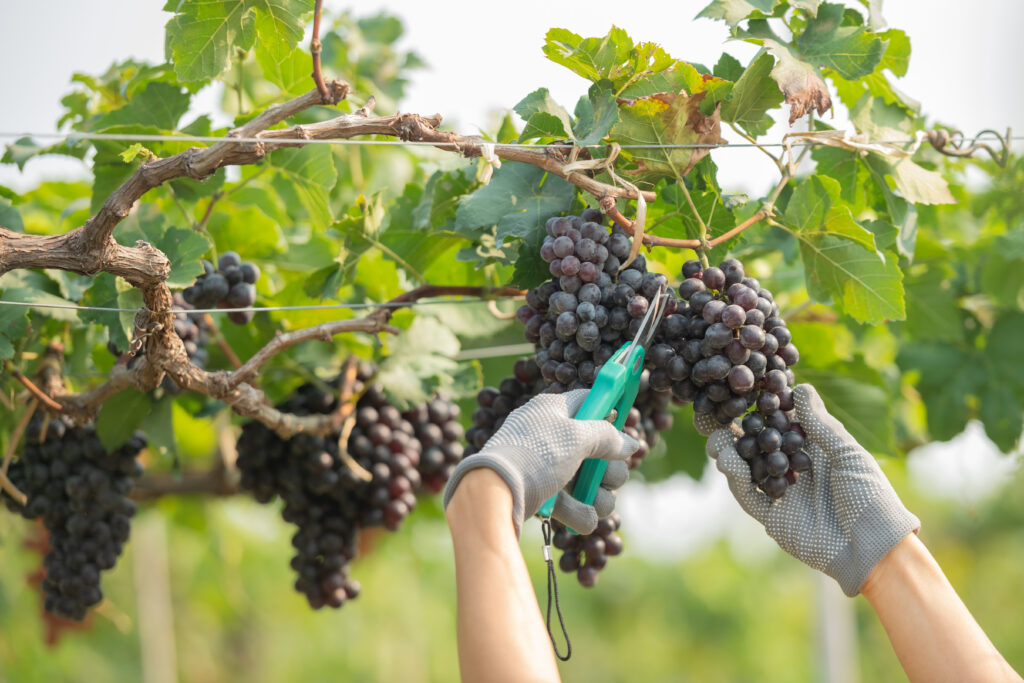
To get the best results from grape farming, the fertiliser programme is the single most important input decision a grape farmer makes every season. Grape is one of the most nutritionally demanding and commercially high-value fruit crops grown in India. Maharashtra’s Nashik, Sangli, and Solapur districts and Karnataka’s Vijayapura region produce export-quality grapes that travel to markets in Europe, the Middle East, and Southeast Asia. But achieving the bunch quality, berry size, colour, sugar content, and post-harvest shelf life that export markets demand requires a precision nutrition programme that goes far beyond the standard urea and DAP approach most Indian farmers still rely on. Every developmental stage of the grape vine has a specific nutritional requirement. And meeting those requirements precisely at the right moment is what separates export-grade vineyards from farms that sell only in the domestic fresh market. Floral Designs brings the complete Basfoliar range from Compo Expert Germany to Indian grape farmers. These are scientifically formulated products that deliver targeted nutrition at every critical stage of the grape crop cycle.
Why Grape Farming Demands a Different Approach to Fertilisation
Grape vines are perennial crops. So they accumulate nutritional imbalances over multiple seasons. A deficiency that starts in year one compounds into year two and year three if it is not addressed. Furthermore, the commercial quality standards for export grapes are among the strictest of any Indian agricultural commodity. Berry size must be uniform. Colour must be consistent. Brix must meet minimum thresholds. Bunch presentation must be clean. And shelf life must hold through cold chain transport to distant markets. These commercial requirements mean that nutrition mistakes in a grape vineyard have direct and immediate financial consequences. A poorly coloured bunch is rejected or downgraded. Berries that crack during the pre-harvest period are lost entirely. Fruit that softens too quickly in cold storage loses market access. So to get the best results from grape farming, every nutritional decision must be made with the commercial outcome at harvest in mind rather than simply following a generic fertiliser schedule. Furthermore, Indian grape vineyards face specific soil challenges that conventional fertilisers cannot address effectively. Alkaline and calcareous soils across Maharashtra and Karnataka fix phosphorus and iron into unavailable forms. High sodium soils in some regions reduce calcium uptake at the root level. And intensive vineyard management with high crop loads places extreme nutritional demands on vines that standard NPK programmes cannot fully meet. So precision nutrition from Compo Expert Germany is not an upgrade for Indian grape farmers. It is a necessity for anyone growing to export quality standards.
Budburst to Flowering: Building the Foundation for a Strong Season
The period from budburst through to just before flowering is where the foundation of the grape season is established. New shoot growth, leaf area development, and inflorescence formation all happen during this phase. So the nutrition programme at this stage must support rapid, balanced growth without pushing excessive vegetative development that would compete with reproductive performance later in the season. Basfoliar 19-19-19 SP from Compo Expert Germany is the ideal product for this stage. Its balanced nitrogen, phosphorus, and potassium ratio supports even shoot and leaf development across the vine canopy. Apply it as a foliar spray every 10 to 14 days from budburst through to the pre-flowering stage. As a result, the vine builds a balanced canopy with good leaf area and strong inflorescence development without excessive vegetative vigour that would delay flowering. Furthermore, start Hydrospeed CaB Max through the drip line from budburst. Calcium is essential for shoot tip development and young leaf growth. Boron supports calcium transport within the vine. So establishing consistent calcium and boron nutrition from the very beginning of the season gives the vine a structural advantage through every subsequent developmental phase. On vineyards with known iron deficiency, interveinal chlorosis on young leaves at budburst is the first visible sign. Start Basafer Plus through the drip system immediately at budburst on affected vineyards. Its EDDHA chelated iron stays stable in the high pH soils of Maharashtra and Karnataka where iron chlorosis is most common. As a result, photosynthetic capacity is restored early in the season before iron deficiency can limit shoot growth and inflorescence development. And add Basfoliar Kelp O SL to alternate foliar sprays through this phase for stress tolerance and nutrient uptake support throughout early season vine growth.
Flowering Stage: Maximising Fruit Set for Better Bunch Filling
The flowering stage is the most critical nutritional window in the grape crop cycle for getting the best results from grape farming. Fruit set percentage at flowering determines the number of berries per bunch. And the number of berries per bunch directly determines the commercial value of the cluster at harvest. So under-delivering on nutrition at this stage has consequences that cannot be corrected later in the season regardless of how well the post-flowering nutrition programme is managed. Phosphorus is the dominant nutritional requirement at flowering. It drives flower development, pollen viability, and the energy transfer processes that support successful fertilisation. So switch the primary foliar spray from balanced NPK to a high phosphorus product as the vine approaches full bloom. Basfoliar 13-40-13 SP is the right product for the grape flowering stage. Apply it two to three times as a foliar spray beginning five to seven days before expected full bloom and continuing through early berry set. As a result, pollen viability improves, fertilisation rates increase, and the percentage of flowers that successfully set as berries goes up. Furthermore, tank-mix Basfoliar Kelp O SL with every flowering stage spray. The natural cytokinins and auxins in seaweed extract support the hormonal signalling that drives successful reproductive development. So fruit set percentage improves further when seaweed is included alongside the high phosphorus foliar spray at flowering. Continue Hydrospeed CaB Max through the drip line consistently through the flowering and early berry set period. Boron in this product is critical for pollen tube elongation. So drip boron at flowering works directly alongside foliar phosphorus nutrition to maximise fertilisation success and berry set percentage.
Berry Development Phase: Drive Size and Prevent Cracking
Once berry set is confirmed, the vine enters the berry development phase where the commercial outcome of the season is largely determined. Berry size, bunch architecture, and freedom from cracking are the three most important quality parameters at this stage. And all three are directly influenced by the nutrition programme. Potassium is the dominant nutritional requirement through berry development. It controls cell expansion in developing berries, drives sugar loading into the berry flesh, and regulates the water relations that determine berry firmness and skin integrity. So the fertiliser programme must shift strongly toward potassium from berry set through to pre-harvest. Basfoliar Fruit SP is the primary foliar spray for the berry development phase. Its high potassium and phosphorus formulation drives berry sizing, sugar accumulation, and colour development. Apply it every 10 to 14 days from berry set through to four weeks before harvest. As a result, berry girth increases, bunch weight improves, and the proportion of premium grade bunches in the harvest goes up. Basfoliar K WP is introduced in alternate sprays through the berry development and pre-harvest stage. Its chloride-free potassium formulation is specifically important for grapes. Because grapes are highly sensitive to chloride accumulation. And standard potassium fertilisers including muriate of potash carry significant chloride loads that reduce berry quality and create long-term root zone salinity problems in vineyards. So Basfoliar K WP delivers the potassium push that berry development and colour demand without the chloride risks. Furthermore, continue Hydrospeed CaB Max through the drip line without interruption through the entire berry development phase. Berry cracking in grapes, like fruit cracking in pomegranate, is primarily a calcium deficiency problem triggered by irregular water supply. Consistent calcium delivery through every irrigation cycle from berry set to pre-harvest maintains cell wall strength in the berry skin. As a result, cracking incidence is significantly reduced and the marketable percentage of the bunch at harvest improves.
Veraison to Pre-Harvest: Locking in Colour, Sugar, and Shelf Life
Veraison, the stage where grape berries begin to soften and change colour, marks the final phase of the nutrition programme before harvest. This is where colour development, final sugar loading, and berry firmness are determined. So the pre-harvest nutrition programme directly decides whether the grapes end up as export grade or domestic grade at harvest. Potassium is the most critical nutrient through and after veraison. It drives anthocyanin production in the berry skin, which determines colour intensity in red varieties. It also drives sugar accumulation in the berry flesh, which determines brix readings at harvest. And it strengthens the pectin structure of the berry skin, which determines firmness and resistance to bruising during harvest and transport. Continue Basfoliar K WP as the primary foliar spray through veraison and the pre-harvest period. Apply it every 10 to 14 days from veraison through to three weeks before harvest. As a result, colour development is deeper and more uniform across the bunch, brix readings at harvest are consistently higher, and berry firmness holds better through cold chain transport to distant markets. Stop nitrogen applications completely after veraison. High nitrogen in the pre-harvest period delays colour development, dilutes sugar concentration, and softens berry skins. So reducing nitrogen while maintaining potassium and calcium through the final weeks before harvest is one of the most impactful and lowest-cost adjustments available to get the best results from grape farming at harvest quality level. Continue Hydrospeed CaB Max through the drip line until two weeks before harvest. Consistent calcium delivery through the pre-harvest period maintains berry skin integrity, reduces post-harvest softening, and lowers the incidence of grey mould infection that calcium-deficient berry skins are more vulnerable to.
The Complete Grape Farming Nutrition Programme at a Glance
To get the best results from grape farming, here is how the complete precision nutrition programme fits together across the full annual vine development cycle. Step 1: At budburst, start Hydrospeed CaB Max through the drip line and begin foliar sprays with Basfoliar 19-19-19 SP every 10 to 14 days. Add Basfoliar Kelp O SL to alternate sprays. And start Basafer Plus through the drip on iron-deficient vineyards. Step 2: At flowering, switch the primary foliar spray to Basfoliar 13-40-13 SP. Tank-mix Basfoliar Kelp O SL with every flowering spray. And continue Hydrospeed CaB Max through the drip for boron and calcium support through fruit set. Step 3: From berry set through berry development, apply Basfoliar Fruit SP and Basfoliar K WP in alternate sprays every 10 to 14 days. Continue drip calcium through Hydrospeed CaB Max without interruption. Step 4: From veraison through to three weeks before harvest, continue Basfoliar K WP as the primary foliar spray. Stop nitrogen. And maintain drip calcium until two weeks before harvest. So this four-step programme covers every nutritional requirement of the grape vine from budburst through to pre-harvest. Each product is chosen for the stage where it delivers the greatest commercial impact on bunch quality and export grade percentage. For crop-specific grape nutrition guidelines and production technology recommendations for Indian viticulture, visit the National Horticulture Board of India which publishes research-backed agronomic guidance for grape production across Maharashtra, Karnataka, and other major Indian wine and table grape growing regions. Browse the complete Compo Expert Germany range on the Floral Designs Shop. Learn more about the brand and its sourcing philosophy on the About Us page. And contact the team for personalised guidance on building a grape nutrition programme for your specific vineyard, variety, soil type, and target market.
Conclusion
To get the best results from grape farming, every stage of the vine’s development cycle needs the right nutrition delivered in the right form at the right time. Balanced NPK at budburst. High phosphorus at flowering. Chloride-free potassium through berry development and pre-harvest. Consistent calcium and boron through the drip line from budburst to near harvest. And seaweed biostimulants throughout to maximise stress tolerance and uptake efficiency. The Compo Expert Germany range available through Floral Designs gives Indian grape farmers every product needed to build this complete programme. So if your vineyard is producing below its export grade potential, start with the nutrition. Fix every stage. And see what your vines can produce when they have everything they need at exactly the right time.