
Floral designs

Uncategorized

Uncategorized

Why Balanced NPK Fertilisers Outperform Urea and DAP on Indian Farms

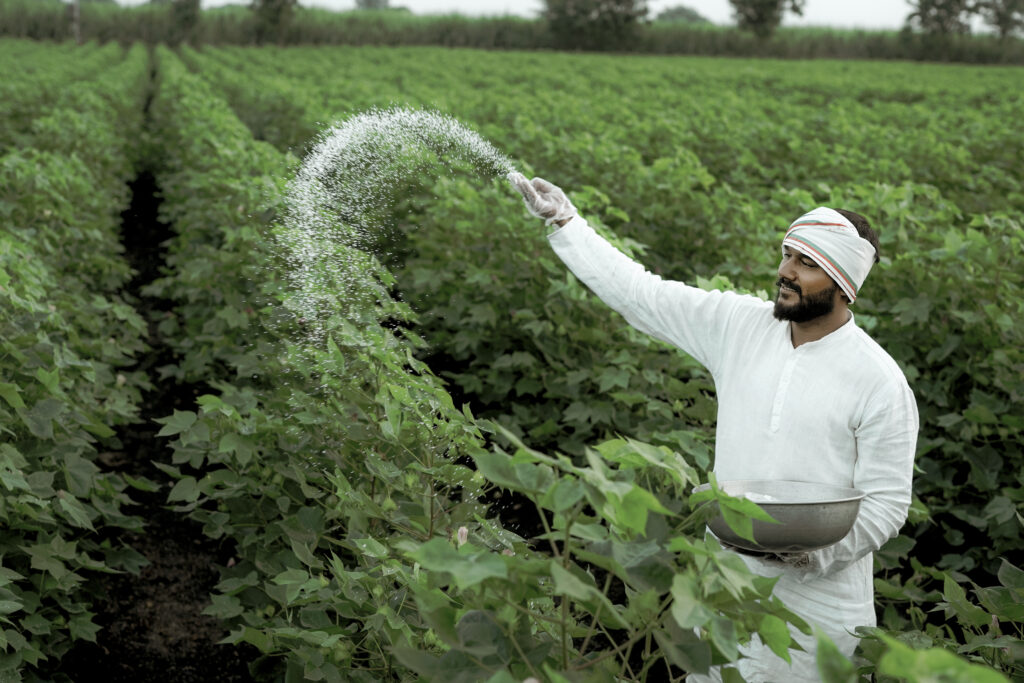
Walk into any agri input shop in India and you will find urea and DAP stacked from floor to ceiling. These two fertilisers have dominated Indian farming for decades. But balanced NPK fertilisers outperform both of them on every measure that matters to a farmer. Urea delivers only nitrogen. DAP delivers nitrogen and phosphorus. Neither one delivers potassium, calcium, sulphur, or micronutrients. As a result, crops grown on urea and DAP alone are nutritionally incomplete from the very start. So instead of patching deficiencies after they appear, balanced NPK fertilisers give the crop what it needs before problems develop. Floral Designs brings the complete Basfoliar range from Compo Expert Germany to Indian farmers. These are precision balanced NPK fertilisers designed to outperform conventional inputs at every stage of the crop cycle. The Problem with Urea and DAP on Indian Farms Urea and DAP are not bad products. However, they are incomplete ones. Urea is a nitrogen-only fertiliser. It pushes vegetative growth. But it does nothing for potassium, phosphorus balance, or micronutrient needs. DAP delivers nitrogen and phosphorus together. However, it carries no potassium at all. So when farmers apply urea and DAP as their primary fertiliser programme, they are feeding two out of the three major plant nutrients. The third one, potassium, is left almost entirely to whatever the soil holds in reserve. Furthermore, urea has a serious efficiency problem. In hot and dry conditions, it volatilises rapidly. So a significant portion of the nitrogen applied leaves the field as ammonia gas. Research consistently shows that less than 50 percent of urea nitrogen actually reaches the crop on Indian farms. As a result, farmers apply more urea than the crop needs just to compensate for these losses. This increases cost without improving results. DAP faces a different problem. In soils with high pH or high iron content, phosphorus gets fixed rapidly into unavailable forms. So the phosphorus the farmer paid for sits locked in the soil, out of reach of the plant. Consequently, phosphorus deficiency persists even on farms where DAP has been applied season after season for years. What Balanced NPK Fertilisers Do Differently Balanced NPK fertilisers solve the core problem that urea and DAP create. Instead of delivering one or two nutrients in isolation, they supply nitrogen, phosphorus, and potassium together in a single formulation. These three nutrients work together inside the plant. Nitrogen drives leaf and shoot growth. But without adequate phosphorus, the plant cannot use that nitrogen efficiently for root development and flower initiation. And without potassium, neither nitrogen nor phosphorus can be transported effectively across the plant’s vascular system. Moreover, water soluble balanced NPK fertilisers are absorbed far more efficiently than granular urea and DAP. When applied as a foliar spray, nutrients reach the leaf surface and enter the plant within hours. When applied through a drip system, they go directly to the root zone without passing through the bulk soil where fixation losses occur. Therefore, the farmer gets more crop response from less product compared to conventional fertilisers. Additionally, balanced NPK fertilisers allow the farmer to adjust the nutrient ratio at different crop stages. At the vegetative stage, a balanced ratio supports even canopy growth. At flowering, a high phosphorus ratio pushes flower initiation and fruit set. During fruit development, a high potassium ratio drives sizing, colour, and quality. This flexibility is simply not possible with a fixed urea and DAP programme. Basfoliar 19-19-19 SP: The Balanced NPK Fertiliser for the Vegetative Phase Basfoliar 19-19-19 SP is the most versatile balanced NPK fertiliser in the Floral Designs range. Its equal ratio of nitrogen, phosphorus, and potassium makes it ideal for the vegetative phase of almost any crop. Tomato, capsicum, brinjal, mango, grape, banana, vegetables, and cereals all benefit from consistent applications through their early and mid-season growth phases. Furthermore, because it is fully water soluble, it works through both foliar spray and drip systems. So it fits into whatever application method the farmer already has in place. Apply it as a foliar spray every 10 to 14 days through the vegetative phase. As a result, the crop receives consistent, balanced nutrition without the peaks and valleys that infrequent granular top dressings create. Also, unlike urea, it does not volatilise in hot conditions. And unlike DAP, its phosphorus does not get fixed in alkaline soils when applied as a foliar spray. So the farmer gets more of what they pay for into the crop with every single application. Basfoliar 13-40-13 SP: High Phosphorus NPK for the Flowering Stage At flowering, the crop’s nutritional balance shifts. Phosphorus demand rises sharply. However, nitrogen needs to come down slightly to avoid pushing vegetative growth at the expense of flower development. So a general balanced fertiliser is no longer the best option at this stage. Basfoliar 13-40-13 SP is a high phosphorus balanced NPK fertiliser designed specifically for the flowering window. Its elevated phosphorus content drives flower initiation, improves pollen viability, and supports successful fruit set. For example, tomato, capsicum, mango, grape, and pomegranate farmers who apply this product two to three times as a foliar spray around flowering consistently report better fruit set and more uniform crop development across the season. Furthermore, because it is applied as a foliar spray rather than to the soil, its phosphorus reaches the plant at exactly the right moment. As a result, it avoids the soil fixation problem that makes granular DAP so unreliable at this critical stage. Basfoliar Fruit SP: High Potassium NPK for Fruit Development Once fruit set is confirmed, potassium takes over as the dominant nutritional requirement. Therefore, the programme needs to shift toward a higher potassium ratio. Basfoliar Fruit SP is designed precisely for this stage. Its high potassium and phosphorus formulation drives fruit sizing, improves colour development, increases sugar content, and strengthens fruit skin. So for fruit and vegetable farmers, regular applications through the fruit development phase make a direct commercial difference. Better colour means better grading. Higher sugar content means better taste and higher buyer


Uncategorized

Best Fertiliser for Vegetable Farming in India: What Actually Works

Vegetable farming in India is demanding. Crops grow fast, fruit repeatedly, and drain soil nutrients quickly. Most farmers rely on urea, DAP, and farmyard manure applied at fixed intervals. Then they wonder why yields fall short and quality stays inconsistent. The problem is not effort. It is the wrong products applied at the wrong time. Finding the best fertiliser for vegetable farming means understanding what each crop needs at each growth stage. Floral Designs brings the complete Basfoliar range from Compo Expert Germany to Indian vegetable farmers. These are precision nutrition products built on science, not habit. Why Standard Fertiliser Programmes Fall Short Most Indian vegetable farms follow the same routine. DAP goes in at planting. Urea gets top-dressed two or three times through the season. A micronutrient spray appears only when the crop shows obvious problems. This approach has been the default for decades. However, it has serious gaps that cost farmers money every season. First, urea and DAP together deliver nitrogen and phosphorus but almost no potassium, calcium, or micronutrients. Vegetable crops are heavy potassium consumers. Yet most programmes chronically underfeed this nutrient. Second, the timing is off. A tomato plant at transplanting has completely different needs from the same plant at flowering. Blanket schedules feed the farmer’s convenience, not the crop’s demand. Third, nutrient form matters more than most farmers realise. DAP phosphorus gets fixed rapidly in high pH soils. Urea nitrogen volatilises quickly in hot, dry conditions. As a result, a large portion of every bag of conventional fertiliser never reaches the plant. Switching even part of the programme to high-quality water soluble fertilisers puts more of what the farmer spends directly into the crop. What Vegetable Crops Need at Each Growth Stage Before choosing the best fertiliser for vegetable farming, it helps to understand the nutritional blueprint most vegetable crops follow. At transplanting, the priority is root development and recovery from transplant stress. Phosphorus and calcium dominate at this stage. They support root tip growth and build strong cell walls in young tissues. Through the vegetative phase, nitrogen drives canopy expansion. Balanced NPK nutrition with micronutrient support keeps the plant growing evenly. However, it should not push excessive vegetative growth at the expense of later reproductive performance. At flowering and fruit set, phosphorus becomes critical again. Flower initiation, pollen quality, and successful fruit set all depend on adequate phosphorus at exactly the right moment. Most vegetable farmers miss this window because their phosphorus was applied early and already fixed by the soil before the crop needed it most. During fruit development and ripening, potassium takes over. It drives fruit sizing, colour development, sugar accumulation, and post-harvest quality. Calcium continues to matter for preventing blossom end rot in tomato and tip burn in leafy vegetables. This final stage determines the commercial value of the entire crop. The Best Fertiliser Products for Indian Vegetable Farming Basfoliar 19-19-19 SP is the most versatile product in the range for vegetable farmers. Its balanced nitrogen, phosphorus, and potassium ratio works across the full vegetative phase for almost every vegetable crop. Tomato, capsicum, brinjal, cucumber, bitter gourd, beans, and leafy greens all respond well to it. Moreover, because it is fully water soluble, it works as a foliar spray or through a drip system. Apply it every 10 to 14 days through the vegetative phase. For farmers with drip irrigation, fertigating with this product every second irrigation cycle gives even more consistent nutrition throughout the season. Basfoliar 13-40-13 SP is the product to use when crops approach flowering. Its high phosphorus concentration is designed specifically for foliar application in the two to three weeks around flower initiation. For tomato and capsicum farmers, applying it two to three times starting one week before the first flowers open improves flower numbers, reduces flower drop, and increases fruit set percentage. Better fruit set at this stage is the most reliable way to increase total yield without adding more growing area. Basfoliar Fruit SP takes over once fruit set is confirmed. Its high potassium and phosphorus formulation drives fruit sizing, improves colour uniformity, increases sugar content, and strengthens fruit skin. For tomato farmers selling into fresh markets, regular applications through the fruit development phase make a visible difference to the quality profile of the harvested crop. Basfoliar K WP is a chloride-free potassium fertiliser for foliar application during fruit development and pre-harvest. For crops sensitive to chloride accumulation, such as potato, capsicum, and certain cucumber varieties, this product delivers the potassium push needed for sizing and ripening without the chloride load that standard potassium fertilisers carry. Apply it every 10 to 14 days through the final four to six weeks before harvest. Calcium Nutrition: The Most Neglected Part of Vegetable Fertilisation No discussion of the best fertiliser for vegetable farming is complete without calcium. Yet it receives almost no attention in the standard input programme most farmers follow. Blossom end rot in tomato, tip burn in lettuce and cabbage, hollow stem in broccoli, and internal browning in capsicum are all calcium deficiency disorders. They cost Indian vegetable farmers significant money every season. Furthermore, they are almost entirely preventable with consistent calcium delivery through the irrigation system. Hydrospeed CaB Max delivers calcium and boron through the drip line in a fully water soluble form. Run it from transplanting through to the final weeks of fruit development. This gives calcium-sensitive crops the steady supply they need to build strong fruit cell walls and prevent quality failures at harvest. For farms where iron deficiency is a recurring problem, yellowing leaves with green veins is the clearest sign. In that case, Basafer Plus corrects iron chlorosis through the drip system. It uses chelated iron in EDDHA form, which stays stable even in high pH soils where this problem is most common. Why Seaweed Belongs in Every Vegetable Nutrition Programme One of the most consistent improvements Indian vegetable farmers report is the addition of a seaweed biostimulant to their spray schedule. Basfoliar Kelp O SL is a liquid seaweed

Uncategorized

How Calcium and Boron Work Together to Protect Your Crop from the Inside

There are two nutrients that Indian farmers consistently underestimate until the damage they cause is already visible in the field. Calcium and boron rarely appear in the standard fertiliser conversation that dominates most input buying decisions, yet their absence at critical moments in the crop cycle causes some of the most economically damaging problems a farmer can face. Fruit cracking, blossom end rot, flower drop, poor fruit set, internal browning, and tip burn are all disorders that trace back to calcium and boron deficiency, and all of them are almost entirely preventable with the right nutrition at the right time. Floral Designs brings precision calcium and boron nutrition from Compo Expert Germany to Indian farmers, making it straightforward to protect crops from these deficiencies before the damage starts rather than trying to recover from it after. Why Calcium and Boron Are Always Discussed Together Calcium and boron are not interchangeable nutrients. They serve distinct functions inside the plant. But they are discussed together in agronomy because they are functionally interdependent in ways that matter enormously for crop health and fruit quality. Boron controls the mobility and transport of calcium within the plant. Without adequate boron, calcium cannot move efficiently from the roots and stems to the actively growing tissues where it is most needed. This means a crop can have sufficient calcium in the soil and even in the lower plant but still show calcium deficiency symptoms in the young leaves, developing fruit, and growing shoot tips if boron is limiting. This interdependence is why addressing calcium and boron together in the nutrition programme consistently delivers better results than treating them as separate, unrelated nutrients. A calcium application without boron support may not deliver calcium to the tissues that need it most. A boron application without adequate calcium has nothing to transport. The two nutrients must be managed together for either one to perform at its best. What Calcium Does Inside the Plant Calcium is a structural nutrient. Its primary role is in the formation and maintenance of cell walls across every tissue in the plant. Calcium acts as a binding agent in the pectin layer of the cell wall, giving cells their rigidity and structural integrity. Tissues with strong calcium-reinforced cell walls are firmer, more resistant to physical damage, and less vulnerable to penetration by fungal pathogens that exploit weak cell walls to establish infections. In developing fruit, calcium is the nutrient that determines firmness and shelf life. Fruit with adequate calcium at every stage of development from cell division through to maturity is firmer at harvest, bruises less during handling and transport, and holds its quality for longer in storage and on the retail shelf. This post-harvest quality factor has a direct commercial impact for Indian farmers selling to markets where fruit appearance and shelf life determine the price received. Calcium is also essential for root tip development and the health of the growing meristematic tissue at shoot tips and young leaves. When calcium supply is interrupted, these actively dividing tissues show the first and most severe deficiency symptoms because calcium cannot be remobilised from older tissues where it is already locked into cell wall structures. This immobility is the key characteristic of calcium that makes consistent, continuous supply so important throughout the growing season. What Boron Does Inside the Plant Boron’s functions in the plant are concentrated in two areas that have enormous practical importance for fruit farmers. The first is reproductive development. Boron is essential for pollen germination and pollen tube elongation, the physical process by which pollen delivered to the stigma of a flower must grow a tube down through the style to reach the ovule and achieve fertilisation. Without adequate boron, pollen tube growth is impaired, fertilisation rates drop, and fruit set percentage falls even when flowering has been abundant and phosphorus nutrition at flowering has been well managed. The second major function of boron is the transport of sugars and calcium within the plant. Boron forms complexes with sugar molecules that facilitate their movement through the phloem from source tissues to sink tissues. It also plays a role in the loading of calcium into the xylem stream for transport to developing tissues. This dual transport role means boron deficiency simultaneously impairs sugar movement to developing fruit and calcium delivery to growing tissues, creating a compounding nutritional failure that affects both fruit quality and plant structure. Boron deficiency is most visible in rapidly growing tissues. Shoot tip dieback, hollow stems in brassicas, cracked or corky fruit surface tissue, and poor fruit set despite adequate flowering are all classic boron deficiency symptoms that Indian farmers frequently encounter without correctly identifying boron as the cause. The Most Common Calcium and Boron Deficiency Disorders on Indian Farms Understanding what calcium and boron deficiency looks like in practice helps farmers identify these problems early and correct them before losses compound. Here are the most economically significant disorders caused by calcium and boron deficiency across Indian crop systems. Blossom End Rot in Tomato and Capsicum: This is one of the most widespread calcium deficiency disorders in Indian vegetable farming. It appears as a dark, sunken, leathery patch at the blossom end of developing fruit, typically becoming visible as the fruit approaches half its final size. It is caused by calcium deficiency in the developing fruit tissue, often triggered by irregular irrigation that disrupts the transpiration-driven calcium supply to the fruit rather than by low soil calcium levels. Consistent calcium delivery through the drip line is the most reliable prevention. Fruit Cracking in Grape, Pomegranate, and Tomato: Cracking occurs when the internal fruit tissue grows faster than the skin can expand to accommodate it. Calcium deficiency weakens the skin cell walls, making them less elastic and more prone to splitting under the pressure of rapid internal growth. Boron deficiency compounds this by reducing the calcium supply to the skin tissue. Farmers experiencing regular fruit cracking almost always show calcium and boron deficiency in tissue testing. Tip Burn in Leafy

Uncategorized

Why Phosphorus Timing at Flowering Can Make or Break Your Harvest

Of all the nutritional decisions a farmer makes across a growing season, few have as direct an impact on final yield and crop value as getting phosphorus timing at flowering right. Farmers who apply phosphorus on a fixed calendar schedule, treating it the same way across every growth stage, routinely leave yield on the table without understanding why. The flowering window is the most nutritionally sensitive period in the entire crop cycle, and what happens nutritionally in the two to three weeks surrounding flower initiation sets the trajectory for everything that follows, from fruit set percentage to final harvest weight and quality. Floral Designs brings the precision phosphorus products from Compo Expert Germany that give Indian farmers the tools to hit this window with exactly the right nutrition at exactly the right moment. Why Phosphorus Is the Dominant Nutrient at Flowering Every major nutrient plays a role in crop development, but each one has a phase of the crop cycle where its importance peaks above all others. For phosphorus, that phase is flowering and fruit set. Understanding why requires a brief look at what phosphorus actually does inside the plant at this stage. Phosphorus is the primary driver of energy transfer within the plant. It forms the backbone of ATP, the molecule that powers virtually every metabolic process in plant cells. During the reproductive transition from vegetative to flowering growth, the plant’s energy demands surge as it initiates flower buds, develops pollen, and triggers the hormonal signals that drive fruit set. All of this activity runs on phosphorus-powered energy transfer at the cellular level. Beyond energy metabolism, phosphorus is directly involved in cell division within developing flower buds and fruitlets. Adequate phosphorus at flower initiation supports the development of more flowers per plant, improves pollen viability and germination, and strengthens the biochemical signals that determine how many of those flowers successfully set fruit. A phosphorus shortfall at this exact moment does not just reduce flowering. It reduces the productive potential of the entire crop for the rest of the season. What Happens When Phosphorus Timing at Flowering Is Wrong The consequences of missing the phosphorus timing at flowering window are visible at harvest but originate weeks earlier during flower development. Farmers who apply phosphorus too late, after flowering has already peaked and fruit set has begun, miss the window where phosphorus can actually influence flower numbers and set percentage. The nutrient arrives when the critical decisions in the plant’s reproductive cycle have already been made. Applying phosphorus too early is a less discussed but equally real problem. Phosphorus applied in granular form to the soil weeks before flowering is often fixed by soil chemistry, leached below the root zone, or consumed by vegetative growth before the crop reaches its reproductive phase. By the time the plant needs phosphorus most at flower initiation, the available supply in the root zone is already depleted and the next application has not yet been made. The practical result of poor phosphorus timing is a crop that flowers unevenly, sets a lower percentage of its flowers as fruit, produces smaller and lighter fruit across the harvested population, and delivers a final yield well below what the season’s growing conditions would otherwise have supported. The Case for Foliar Phosphorus at Flowering The most reliable solution to the phosphorus timing at flowering challenge is foliar application of a fully water soluble phosphorus product in the two to three weeks surrounding flower initiation. Foliar application bypasses the soil chemistry issues that make granular phosphorus unreliable at this stage. The nutrient goes directly onto the leaf surface, is absorbed through the stomata and cuticle, and enters the plant’s vascular system within hours of application. This speed and directness is exactly what the crop needs during the flowering window. There is no delay waiting for soil dissolution. There is no risk of phosphorus fixation by soil calcium, aluminium, or iron. The phosphorus the farmer applies reaches the plant at the moment it is needed, in a form the plant can use immediately for the energy-intensive processes of flower development and fruit set. Foliar phosphorus at flowering also allows the farmer to adjust the timing based on actual crop development rather than a fixed calendar date. Different seasons, different field locations within the same farm, and different crop varieties all reach the flowering stage at slightly different times. Monitoring the crop and applying foliar phosphorus when the crop is actually approaching flower initiation gives far more reliable results than calendar-based applications that may or may not coincide with the crop’s real developmental stage. Basfoliar 13-40-13 SP: The Precision Phosphorus Product for Flowering Basfoliar 13-40-13 SP is the flagship flowering stage product in the Basfoliar range from Compo Expert Germany, available through Floral Designs. Its high phosphorus formulation with supporting nitrogen and potassium is designed specifically for foliar application during the pre-flowering and early fruit set stage. The 13-40-13 ratio means phosphorus is the dominant nutrient in the formulation, present at more than three times the concentration of nitrogen and potassium. This makes it a targeted phosphorus delivery product rather than a general balanced fertiliser, which is exactly what the crop needs at this specific growth stage. The product dissolves completely in water without residue, ensuring the spray solution is uniform and the phosphorus concentration reaching each leaf surface is consistent across the entire application. For mango farmers, applying Basfoliar 13-40-13 SP beginning one week before panicle emergence and continuing through early fruitlet development consistently improves panicle quality, pollen viability, and the percentage of flowers that develop into marketable fruit. Grape farmers in Maharashtra use this product during bunch initiation to improve berry set uniformity and reduce the percentage of shot berries that reduce bunch quality at harvest. Tomato and capsicum growers across Karnataka and Andhra Pradesh apply it at first flower bud appearance to push flower numbers and reduce flower drop under high temperature conditions. Pairing Phosphorus with Boron at Flowering One of the most reliable ways to amplify the

Uncategorized

Why Potassium Is the Most Underrated Nutrient in Indian Crop Nutrition

When Indian farmers talk about fertilisers, the conversation almost always centres on nitrogen and phosphorus. Urea and DAP dominate the input buying decisions on most farms, season after season, while the third major plant nutrient gets far less attention than it deserves. Potassium is the most underrated nutrient in Indian crop nutrition, and the consequences of that undervaluation show up every harvest in the form of weak fruit, poor crop resilience, short shelf life, and yields that never quite reach their potential. Correcting this imbalance is one of the fastest ways Indian farmers can improve their crop performance without dramatically increasing total fertiliser spending. Floral Designs supplies precision potassium nutrition products from Compo Expert Germany, giving farmers the tools to address potassium deficiency with the same rigour that nitrogen and phosphorus management deserves. What Potassium Actually Does in the Plant Most farmers know that nitrogen drives leaf and shoot growth and that phosphorus supports root development and flowering. Far fewer have a clear picture of what potassium actually does inside the plant, and that knowledge gap is a large part of why it gets underfed so consistently on Indian farms. Potassium is involved in more plant physiological processes than any other nutrient. It regulates the opening and closing of stomata, the tiny pores on the leaf surface that control gas exchange and water loss. When potassium is adequate, the plant manages water more efficiently, stays turgid under heat stress, and recovers faster from dry spells. When potassium is deficient, stomatal regulation breaks down, the plant loses water faster than it should, and heat and drought stress effects are significantly amplified. Potassium also drives the loading and movement of sugars from the leaves where they are produced to the fruit, tubers, and storage organs where they accumulate. This sugar transport function is directly responsible for fruit sweetness, starch content in potatoes, and the energy reserves that allow the plant to complete its reproductive cycle. A potassium-deficient crop produces leaves that make sugar but cannot move it to where it is needed, resulting in poor fruit quality and low marketable yields even when the rest of the nutrition programme looks adequate on paper. Additionally, potassium strengthens the plant’s natural disease resistance by thickening cell walls and improving the structural integrity of plant tissue. Crops with adequate potassium nutrition show lower incidence of fungal infections, fewer post-harvest rots, and better tolerance of environmental stress across the season. Why Indian Soils Are Commonly Potassium Deficient India’s fertiliser policy has historically subsidised urea and DAP heavily while leaving potassium fertilisers with far less support. The practical result is that Indian farmers apply nitrogen and phosphorus at close to recommended rates but routinely under-apply potassium because the unsubsidised cost makes it feel like the optional nutrient in the programme. Decades of this imbalanced application pattern have depleted potassium reserves across a significant portion of India’s agricultural soils. Sandy soils in coastal regions and high-rainfall zones lose potassium rapidly through leaching. Heavy cropping without adequate potassium replacement draws down soil reserves faster than natural weathering can replenish them. Regular soil testing across states including Karnataka, Tamil Nadu, Maharashtra, and Gujarat has shown that a growing proportion of agricultural land now falls into the low to medium potassium category, meaning crops are starting each season already in deficit before the first fertiliser application is even made. This background deficiency, combined with the routine under-application of potassium fertilisers, creates a chronic nutritional gap that expresses itself in exactly the symptoms farmers most commonly complain about: poor fruit quality, weak crop resilience, high disease incidence, and disappointing post-harvest performance. Recognising Potassium Deficiency in the Field Identifying potassium deficiency early allows farmers to correct it before it causes serious yield and quality losses. The most visible symptom is scorching or browning of leaf margins and tips, starting with older lower leaves and progressing upward through the canopy as deficiency worsens. This marginal leaf scorch is often confused with salt burn or disease, leading to misdiagnosis and incorrect treatment. Other visible signs include weak stem structure with plants that lodge or fall over easily, poor fruit sizing even when flowering and fruit set have been adequate, uneven fruit colour development, and soft fruit with short post-harvest shelf life. In root and tuber crops, potassium deficiency shows as undersized, poorly shaped tubers with low starch content. In grain crops, it results in poor grain filling, lodging at maturity, and increased susceptibility to fungal disease at the leaf and stem level. If you are seeing any of these symptoms regularly on your farm, a soil test combined with a plant tissue test will confirm whether potassium deficiency is the underlying cause, and the correction protocol is straightforward with the right products. Basfoliar K WP: Precision Potassium Through Foliar Application For fast correction of potassium deficiency and for targeted potassium nutrition during the critical fruit development and ripening stage, Basfoliar K WP is the most effective product in the Floral Designs range for this purpose. Basfoliar K WP is a potassium schoenitte fertiliser in a fully water soluble powder form, designed specifically for foliar application. It is completely chloride-free, which is critically important for potassium-sensitive crops including grapes, strawberries, potatoes, citrus, and most tree fruits. Chloride accumulation in these crops suppresses growth, reduces fruit quality, and creates soil salinity problems over time. Basfoliar K WP delivers the potassium the plant needs without the chloride load that muriate of potash and other common potassium sources carry. Applied as a foliar spray during the fruit development and pre-harvest phase, it drives sugar loading in fruit, improves colour development, increases fruit firmness, and extends post-harvest shelf life. Grape farmers in Maharashtra and Karnataka using Basfoliar K WP in the berry development stage consistently report better colour intensity, higher sugar readings at harvest, and improved export grade percentage from their vineyards. Basacote High K 6M: Sustained Potassium Through Controlled Release For farmers who want a sustained potassium supply across the full growing season without repeated applications, Basacote High

Uncategorized

How Fertigation Is Helping Indian Farmers Cut Costs and Improve Yields

Indian farmers are under more pressure than ever to produce better crops at lower input costs. Fertiliser prices have risen significantly over the last few years, water availability is becoming less predictable across many states, and labour costs continue to climb every season. In this environment, any farming practice that improves fertiliser efficiency, reduces water waste, and cuts the number of field operations required is worth serious attention. Fertigation is one of those practices, and it is quietly transforming the economics of crop production for farmers across India who have made the switch. Floral Designs supplies the complete range of Compo Expert Germany water soluble and liquid fertilisers that are designed specifically for fertigation systems, giving Indian farmers the right products to get the most out of every drop of water and every rupee spent on crop nutrition. What Is Fertigation and How Does It Work Fertigation is the practice of dissolving fertilisers into irrigation water and delivering them to the crop through a drip or sprinkler irrigation system. Instead of applying fertiliser separately from irrigation as a granular top dressing or foliar spray, fertigation combines both operations into one, saving time, labour, and the cost of separate application passes across the field. The fertiliser is mixed into the irrigation water at the water source using an injector or venturi system, and the nutrient solution travels through the drip lines to be delivered directly to the root zone of each plant. Because the nutrients arrive at the root zone already dissolved in water, they are immediately available for plant uptake without the dissolution delays and soil fixation losses that granular fertilisers applied to the soil surface suffer from. The result is a more efficient nutrient delivery system that puts more of what the farmer pays for directly into the crop, rather than losing it to the environment through leaching, volatilisation, or soil chemical fixation. The Cost Reduction Case for Fertigation The financial case for fertigation in Indian farming is built on several compounding efficiency gains that add up to a significant reduction in total input cost per season. The first gain is fertiliser use efficiency. Research consistently shows that fertigation delivers nutrients to the plant with significantly higher efficiency than conventional broadcast or band application of granular fertilisers. When a farmer switches from broadcasting urea to applying nitrogen through a drip system, the proportion of applied nitrogen actually absorbed by the crop increases substantially. This means the farmer can achieve the same crop nutrition outcome with a lower total quantity of fertiliser, directly reducing the fertiliser cost per hectare per season. The second gain is labour reduction. A conventional fertiliser programme for most Indian crops involves multiple separate application events across the season, each requiring labour for spreading, post-application irrigation scheduling, and crop monitoring. Fertigation integrates fertiliser delivery into the irrigation cycle, eliminating separate fertiliser application operations and reducing the total labour requirement for crop nutrition management across the season. The third gain is water use efficiency. Because fertigation delivers water and nutrients simultaneously to the root zone of each plant, it eliminates the surface runoff and deep percolation losses associated with flood and furrow irrigation. Farmers who shift from flood irrigation to drip fertigation typically see a 30 to 50 percent reduction in total water use while maintaining or improving crop performance. The Yield Improvement Case for Fertigation Beyond cost reduction, fertigation consistently improves crop yields and quality when implemented correctly. The mechanism behind this improvement is straightforward. A crop that receives the right nutrients at the right time in a form it can immediately absorb performs better than a crop that receives the same total nutrient quantity through a less efficient delivery method. Fertigation allows the farmer to split fertiliser applications into multiple small, frequent doses across the season rather than applying the full nutrient requirement in two or three large doses. This split application approach keeps nutrient concentrations in the root zone at optimal levels for plant uptake throughout the growing season, avoiding the feast and famine cycle that conventional top dressing creates. The ability to adjust nutrient ratios through the drip system at different growth stages is another yield driver. During vegetative growth, the fertigation programme can be weighted toward nitrogen. At flowering, phosphorus can be increased through the drip line. During fruit development, potassium can be pushed higher. This stage-specific adjustment mirrors the crop’s actual nutritional demand across the season and drives better performance at every phase of development. The Right Fertilisers for Fertigation Systems Not every fertiliser is suitable for fertigation. Products used in drip systems must be completely water soluble, must not block emitters or drip lines, and must be compatible with the irrigation water chemistry on the farm. This is where the Compo Expert Germany range available through Floral Designs delivers a clear advantage over generic market fertilisers. Hydrospeed CaB Max is one of the most important fertigation products for Indian fruit and vegetable farmers. It delivers calcium and boron through the drip line directly to the root zone. Calcium is one of the least mobile nutrients in the plant and must arrive consistently at developing tissues through the transpiration stream. Drip-applied calcium through Hydrospeed CaB Max corrects and prevents calcium deficiency disorders including blossom end rot in tomato, tip burn in lettuce and cabbage, and fruit cracking in grapes and pomegranate far more effectively than soil-applied calcium sources. Basafer Plus is the go-to fertigation product for iron deficiency correction on Indian farms. It provides chelated iron in EDDHA form, which remains stable and plant-available across the wide soil pH range found on Indian farms, including the highly alkaline and calcareous soils of Punjab, Haryana, Gujarat, and Maharashtra where iron chlorosis is a persistent seasonal problem. Applied through the drip system, it corrects iron deficiency from the root zone up, which is more effective than foliar iron applications alone on crops with dense canopies or severe deficiency. Basfoliar Kelp O SL works through both foliar spray and drip fertigation, making it

Uncategorized

Granular vs Liquid Fertilisers: What Every Indian Farmer Needs to Know

Ask ten Indian farmers which fertiliser format works best and you will get ten different answers. Some swear by granular fertilisers that have worked on their fields for decades. Others have shifted to liquid fertilisers after seeing faster crop response and better seasonal consistency. The truth is that both formats have a genuine role in modern crop nutrition, and choosing between them based on habit rather than agronomic logic is costing farmers money every season. Understanding how granular vs liquid fertilisers actually differ in terms of nutrient delivery, absorption efficiency, and best-fit crop situations is the foundation of any smart input decision. Floral Designs carries both formats from Compo Expert Germany, giving Indian farmers access to the full spectrum of precision crop nutrition in one place. How Granular Fertilisers Work and Where They Excel Granular fertilisers are solid, particle-based products applied directly to the soil. Once in contact with soil moisture, they begin to dissolve and release nutrients into the root zone. The speed at which this happens depends on the solubility of the product, soil moisture levels, soil temperature, and the physical size and coating of the granule. Standard granular fertilisers dissolve relatively quickly after application and release their full nutrient load in a short window. This can be effective when the crop has an immediate, high nutritional demand, but it also means the plant is flooded with more nutrients than it can absorb at once, with the surplus lost to leaching or soil fixation. Controlled release granular fertilisers like Basacote High K 6M from Compo Expert Germany work very differently. The granule is coated with a temperature-sensitive polymer membrane that regulates nutrient release over six months. As soil temperature rises and plant metabolic activity increases, the membrane becomes more permeable and releases more nutrients. When temperatures drop and plant activity slows, the release rate decreases to match. This makes Basacote High K 6M one of the most efficient granular fertilisers available to Indian farmers, delivering consistent nutrition across the full growing season from a single basal application without the waste associated with conventional granular products. Granular fertilisers are best suited for basal application at planting, for crops with deep root systems that benefit from soil-level nutrition, for long-duration crops where sustained feeding is needed, and for situations where irrigation infrastructure for fertigation is not available. How Liquid Fertilisers Work and Where They Excel Liquid fertilisers are nutrient solutions applied either as foliar sprays directly onto the leaf surface or through drip irrigation systems to the root zone. Because the nutrients are already in dissolved form, they are immediately available to the plant upon contact without the dissolution step that granular fertilisers require in the soil. This dissolved, ready-to-absorb format is the core advantage of liquid fertilisers. When applied as a foliar spray, nutrients enter the plant through the stomata and leaf cuticle within hours of application. When applied through a drip system as fertigation, nutrients reach the root zone in ionic form and are taken up directly without passing through the bulk soil profile where fixation losses occur. Basfoliar Kelp O SL is a seaweed-based liquid fertiliser that works through both foliar and drip application methods. It improves root development, stress tolerance, and nutrient uptake efficiency, making it a strong complement to any nutrition programme regardless of whether the base fertiliser is granular or liquid. Basfoliar Avant Natur SL is another liquid option that supports soil microbial health and overall plant nutrition through organic liquid formulation, working well as part of an integrated programme alongside synthetic fertilisers. Liquid fertilisers are best suited for fast nutritional corrections during deficiency, targeted feeding at critical growth stages like flowering and fruit development, crops with established drip irrigation systems, and situations where the farmer needs visible crop response within 48 to 72 hours. Granular vs Liquid Fertilisers: The Key Differences Explained Understanding where these two formats diverge helps farmers make better decisions about which to use and when. Here are the most important practical differences every Indian farmer should know. Speed of Nutrient Availability: Liquid fertilisers win clearly on speed. A foliar spray delivers nutrients to the plant within hours. A drip-applied liquid fertiliser reaches the root zone within the same irrigation cycle. Granular fertilisers, even highly soluble ones, require dissolution in soil moisture before nutrients become plant-available, which takes longer and depends on irrigation timing. Precision of Application: Liquid fertilisers allow much more precise control over how much nutrient the plant receives and when. Fertigation through a drip system lets the farmer adjust nutrient concentration with each irrigation cycle. Granular fertilisers applied to the soil are more difficult to adjust once applied, and uneven spreading across the field creates nutritional variation from plant to plant. Suitability for Soil Types: On heavy clay soils common across parts of Andhra Pradesh, Tamil Nadu, and Karnataka, granular fertilisers can become waterlogged and create anaerobic pockets that reduce nutrient availability. On sandy soils in Rajasthan, Gujarat, and coastal regions, granular fertilisers leach rapidly through the profile before the crop can absorb them. Liquid fertilisers applied through drip systems or foliar sprays largely sidestep these soil-specific limitations. Application Infrastructure Required: Granular fertilisers require no special equipment beyond a spreader or manual application. Liquid fertilisers applied through drip systems require an established fertigation setup. Foliar liquid fertilisers require a sprayer, which most Indian farmers already own. This means foliar liquid application is accessible to almost any farmer regardless of irrigation infrastructure, while drip fertigation requires a larger initial investment. Best Use in the Crop Cycle: Granular fertilisers are most effective as basal applications at planting and for sustained background nutrition across the season. Liquid fertilisers are most effective as targeted interventions at critical growth stages. The two formats are not competitors in this sense. They serve different functions within the same nutrition programme. Why the Smartest Farmers Use Both Framing the granular vs liquid fertilisers question as a choice between one or the other misses the point. The most productive farms in India, and across the

Uncategorized

How to Get Better Fruit Quality with the Right Fertiliser at the Right Time

Every fruit farmer knows the frustration of watching a crop that looked promising through the growing season fall short at harvest. Undersized fruit, poor colour, low sugar content, short shelf life after picking these are not random outcomes. They are almost always the result of nutritional gaps at specific points in the crop’s development cycle. Getting better fruit quality is not about applying more fertiliser. It is about applying the right product at the right growth stage, in the right form, so the crop gets exactly what it needs precisely when it needs it most. Floral Designs brings the complete Basfoliar range from Compo Expert Germany to Indian fruit farmers, giving you the tools to feed your crop with the precision that consistent, high-quality harvests demand. Why Timing Matters More Than Quantity in Fruit Nutrition Most fruit farmers apply fertilisers on a fixed calendar schedule, not based on what the crop is actually doing at that point in its development. The result is that nutrients arrive either too early, before the crop’s demand for them peaks, or too late, after the critical development window has already closed. Both scenarios waste money and leave quality on the table. Fruit crops move through clearly defined nutritional phases. Each phase has a dominant nutrient requirement, and meeting that requirement precisely within the right window is what drives better fruit quality at harvest. Miss the phosphorus window at flowering and fruit set suffers. Miss the potassium window during fruit development and colour, firmness, and sugar content all fall short. Nutrition is time-sensitive, and understanding that is the single most important shift a fruit farmer can make. Stage 1: Establishment and Early Growth Before a fruit crop can produce quality fruit, it needs a strong structural foundation. Root development, canopy establishment, and early vegetative growth all depend on balanced nutrition from the start of the season. Shortchanging the crop at this stage creates weaknesses that carry through to fruit quality months later. Basfoliar 19-19-19 SP is the ideal product for the early vegetative phase. Its balanced nitrogen, phosphorus, and potassium ratio supports even canopy development without pushing any single nutritional direction too hard. Applied as a foliar spray every 10 to 14 days through the vegetative phase, it keeps the crop growing steadily and prepares it for the more targeted feeding stages ahead. Through the drip line, Hydrospeed CaB Max should be introduced early in the season for calcium-sensitive fruit crops. Calcium is critical for cell wall development in developing fruit tissue. Getting calcium into the root zone consistently from early in the season prevents the calcium deficiency disorders that cause cracking, tip burn, and internal breakdown in fruit crops like tomato, capsicum, apple, and grape. Stage 2: Pre-Flowering and Flower Initiation The two to three weeks leading up to flowering is one of the most nutritionally critical periods in a fruit crop’s entire cycle. Phosphorus is the dominant nutrient at this stage. It drives flower bud initiation, pollen viability, and the hormonal signals that trigger the transition from vegetative to reproductive growth. A phosphorus shortfall at this exact moment reduces flower numbers, lowers pollen quality, and sets the crop up for poor fruit set before flowering has even begun. Basfoliar 13-40-13 SP is the strongest pre-flowering foliar spray in the Basfoliar range. Its high phosphorus concentration with supporting nitrogen and potassium is designed specifically for application in the window before flower opening. For mango, grape, pomegranate, tomato, and guava farmers, applying this product two to three times as a foliar spray beginning one week before expected flower initiation consistently improves flower numbers, uniformity of flowering across the crop, and the percentage of flowers that successfully set fruit. At this stage, adding Basfoliar Kelp O SL to the spray programme gives an additional advantage. This seaweed-based liquid fertiliser contains natural plant growth regulators derived from Ascophyllum nodosum that support the crop’s own hormonal signalling during the reproductive transition. Farmers using Basfoliar Kelp O SL through the pre-flowering and flowering period report better fruit set percentages and more uniform fruit development across the canopy. Stage 3: Fruit Set and Early Fruit Development Once flowering is complete and fruit set is confirmed, the crop’s nutritional focus shifts to supporting the developing fruitlets. This is a stage where calcium and boron become especially important alongside continued phosphorus support. Calcium is needed for cell division in the developing fruit, and boron supports calcium mobility within the plant. A deficiency of either nutrient at this stage leads to fruit cracking, internal browning, and poor fruit structure that only becomes visible weeks later at harvest. Continue drip applications of Hydrospeed CaB Max through the early fruit development phase to keep calcium levels consistent in the root zone. Pair this with continued foliar applications of Basfoliar 13-40-13 SP for another two to three weeks after fruit set to support the continued cell division phase of early fruit growth. For crops on iron-deficient soils, this is also the right time to address iron nutrition through the drip line. Basafer Plus provides chelated iron in EDDHA form that remains stable across a wide soil pH range, correcting iron chlorosis that would otherwise reduce photosynthetic efficiency and limit the energy available for fruit development. Stage 4: Fruit Bulking and Size Development As the fruit moves from early development into the active bulking phase, potassium becomes the dominant nutritional requirement. Potassium controls water movement within the plant and drives the cell expansion that determines final fruit size. It also regulates the stomata, which influences the plant’s overall water use efficiency during the period when the crop is carrying the heaviest fruit load of the season. Basfoliar K WP is a chloride-free potassium schoenitte fertiliser designed for foliar application during this phase. Chloride-free potassium is important for fruit crops sensitive to chloride accumulation, including grapes, strawberries, potatoes, and most tree fruits. Apply Basfoliar K WP as a foliar spray every 10 to 14 days through the fruit bulking phase to drive cell expansion and support the

Uncategorized

Why Water Soluble Fertilisers Give Indian Farmers Better Crop Results Every Season

Walk into any agri input shop across India and you will find shelves stacked with fertiliser bags making bold claims about crop performance. Most of them are conventional granular blends that dissolve unevenly, depend heavily on soil conditions for nutrient release, and deliver inconsistent results from one season to the next. Water soluble fertilisers work differently. They dissolve completely in water, making every nutrient immediately available to the plant through either a drip system or a foliar spray, with no wastage from soil fixation or uneven dissolution. For Indian farmers looking for reliable, repeatable results season after season, water soluble fertilisers from Compo Expert Germany, available through Floral Designs, represent a genuine step forward in crop nutrition. What Makes a Fertiliser Truly Water Soluble Not every fertiliser marketed as water soluble actually dissolves completely. Many standard fertilisers leave residue, block drip emitters, and create uneven nutrient distribution across the field. A truly water soluble fertiliser dissolves fully in water at the recommended concentration without leaving any solid residue, maintaining a clear solution that flows freely through irrigation systems and spray equipment. Compo Expert Germany engineers its Basfoliar range to this standard. Every product in the spray grade and drip grade lines is formulated for complete dissolution, which means the nutrient solution that enters your drip system or sprayer is uniform from the first litre to the last. This consistency is what makes water soluble fertilisers so reliable across multiple application cycles throughout the growing season. The purity of raw materials used in German manufacturing also plays a significant role here. Lower grade water soluble fertilisers often contain impurities that reduce solubility, cause equipment blockages, and introduce unwanted elements into the crop nutrition programme. Compo Expert’s manufacturing standards eliminate these issues before the product leaves the factory. The Absorption Advantage Over Conventional Fertilisers The core reason water soluble fertilisers deliver better crop results is absorption efficiency. When a conventional granular fertiliser is applied to the soil, it must first dissolve in soil moisture, then move through the soil profile to the root zone, then be taken up by the root system in ionic form. At every stage of this journey, nutrients are lost to fixation, leaching, volatilisation, and microbial immobilisation. Water soluble fertilisers applied through a drip system deliver nutrients directly to the root zone in ionic form, ready for immediate plant uptake. Applied as a foliar spray, they are absorbed directly through the leaf surface and enter the plant’s vascular system within hours. Neither pathway involves the long and lossy journey through the bulk soil that conventional fertilisers depend on. For Indian farming conditions, where soils range from highly calcareous and alkaline in the north and west to heavy clay in the south and east, this direct delivery advantage is significant. Phosphorus fixation in calcareous soils and potassium fixation in clay soils are major causes of fertiliser waste on Indian farms. Water soluble fertilisers applied through drip or foliar methods largely bypass these fixation mechanisms and get the nutrient to the plant regardless of soil chemistry. Basfoliar 19-19-19 SP: The All-Season Workhorse For farmers looking for a single reliable water soluble fertiliser that covers general crop nutrition across the vegetative phase, Basfoliar 19-19-19 SP is the strongest starting point in the Basfoliar range. Its equal ratio of nitrogen, phosphorus, and potassium makes it a balanced feeder suitable for most crops and most growth stages during active vegetative development. Applied as a foliar spray every 10 to 14 days through the vegetative phase, it maintains consistent canopy development without pushing the crop too hard in any single nutritional direction. It dissolves completely in water and is safe to use through most spray equipment without risk of nozzle blockage or residue buildup. Vegetable farmers growing tomato, capsicum, leafy greens, and cucurbits regularly use this product as the backbone of their spray nutrition programme from transplanting through to early flowering. Basfoliar 13-40-13 SP: Targeted Phosphorus When It Matters Most Once the crop approaches its flowering window, the nutritional requirement shifts sharply toward phosphorus. Flower initiation, pollen viability, and successful fruit set all depend on adequate phosphorus availability at precisely the right moment. This is where Basfoliar 13-40-13 SP becomes one of the most valuable products in a farmer’s input programme. Its high phosphorus concentration with supporting nitrogen and potassium is specifically designed for foliar application during the pre-flowering and early fruit set stage. Because it is fully water soluble, it absorbs through the leaf surface quickly and gets phosphorus into the plant’s system at the exact moment the crop needs it for reproductive development. Fruit crops including mango, grape, tomato, pomegranate, and guava show consistently better fruit set and more uniform flowering when this product is applied correctly in the two to three week window before and during flowering. Basfoliar Fruit SP: Driving Quality at the Final Stage The final push before harvest is where many farmers leave yield and quality on the table. Fruit that has developed well through the season can still disappoint at harvest if potassium and phosphorus nutrition is inadequate during the final development and ripening phase. Basfoliar Fruit SP is a high potassium and phosphorus water soluble fertiliser designed specifically for this stage. Applied as a foliar spray during fruit development and in the four to six weeks before harvest, it improves fruit sizing, skin quality, sugar content, and post-harvest shelf life. For export-focused fruit farmers where produce appearance and shelf life directly affect commercial value, this product at the right stage can make a measurable difference to the returns from the crop. Water Soluble Fertilisers Through Drip Systems While foliar application is the most common use of water soluble fertilisers in India, drip application, known as fertigation, is where they deliver their most precise and efficient results. Fertigation involves dissolving the fertiliser in the irrigation water and delivering it directly to the root zone through a drip system. This combines irrigation and nutrition into a single operation, saving both water and labour while maximising nutrient uptake

Uncategorized

Why Controlled Release Fertilisers Are the Smartest Investment for Indian Farmers

Every farming season, Indian farmers spend a significant portion of their input budget on fertilisers, only to watch a large part of that investment disappear through leaching, volatilisation, and runoff before the crop can absorb it. Conventional fertilisers release all their nutrients at once, flooding the root zone with more than the plant can use at any given moment and wasting the rest. Controlled release fertilisers solve this problem at the source. By delivering nutrients gradually over an extended period, they match the plant’s actual feeding rhythm, reduce waste, and lower the total number of applications needed across a season. Floral Designs brings Basacote, one of Compo Expert Germany’s most trusted controlled release fertiliser lines, directly to Indian farmers looking for a smarter way to feed their crops. What Is a Controlled Release Fertiliser and How Does It Work? A controlled release fertiliser is a granular fertiliser coated with a specialised membrane that regulates how quickly nutrients are released into the soil. Unlike standard granular fertilisers that dissolve rapidly when they come into contact with soil moisture, controlled release products release their nutrients slowly and steadily over a defined period, typically three, six, or twelve months depending on the product. The release mechanism in Compo Expert’s Basacote range is temperature-driven. As soil temperature rises and plant metabolic activity increases, the coating becomes more permeable and releases more nutrients. When temperatures are lower and plant activity slows, the release rate drops accordingly. This means the fertiliser is actively syncing with the crop’s growth rhythm, feeding more when the plant needs more and pulling back when it does not. This is fundamentally different from slow release fertilisers that simply use a harder coating to delay dissolution. Controlled release technology is precise, predictable, and designed to match plant demand across the full growing season. The Real Cost of Conventional Fertiliser Waste on Indian Farms To understand why controlled release fertilisers make financial sense, you first need to understand how much conventional fertilisers actually waste. Studies across Indian agricultural conditions consistently show that less than 50 percent of applied urea nitrogen is absorbed by the crop. The rest is lost through volatilisation into the atmosphere, leaching below the root zone with irrigation water, or denitrification in waterlogged soils. Phosphorus losses are similarly high in soils with high iron or aluminium content, which is common across large parts of India. Potassium leaches readily in sandy soils and in high-rainfall regions. The practical result is that when you apply a conventional granular fertiliser, you are often paying for two units of nutrient to deliver one unit of actual crop nutrition. Controlled release technology shifts that ratio dramatically by keeping nutrients in the root zone in a form the plant can access as it grows. Basacote High K 6M: The Product Built for Indian Farming Conditions Basacote High K 6M is the flagship controlled release fertiliser available through Floral Designs. The 6M designation refers to its six-month release duration, making it suitable for a full crop cycle without the need for additional granular top-dressing applications mid-season. The High K formulation means this product carries a stronger potassium load relative to nitrogen and phosphorus. This makes it particularly well suited for fruit crops, plantation crops, and vegetables where potassium demand is high across the growing season. Potassium drives fruit sizing, sugar accumulation, disease resistance, and post-harvest shelf life, all of which are commercially important for Indian fruit and vegetable farmers. A single basal application of Basacote High K 6M at planting or at the start of the season provides consistent nutrition for the entire crop cycle. Farmers growing grapes, banana, pomegranate, mango, tomato, and capsicum have reported fewer mid-season deficiency problems and more uniform crop development after switching from conventional granular fertilisers to this product. How Controlled Release Fertilisers Reduce Labour and Application Costs One of the most underappreciated benefits of controlled release fertilisers is the reduction in labour costs they deliver. Conventional fertiliser programmes for most Indian crops require four to six granular applications per season, sometimes more. Each application involves labour for spreading, irrigation scheduling to activate the fertiliser, and monitoring for deficiency signs if the timing is off. With Basacote High K 6M, one application at the start of the season handles the baseline granular nutrition for the next six months. That frees up labour time for other farm operations and eliminates the risk of missed or delayed applications that often cause mid-season nutritional crashes in the crop. For farmers managing large acreages or running operations with limited daily labour availability, this reduction in application frequency translates directly into lower operational costs and more consistent crop nutrition throughout the season. Pairing Controlled Release Fertilisers with Foliar and Drip Programmes A controlled release fertiliser handles the baseline nutritional requirements of the crop across the season. It does not replace targeted foliar and drip applications at critical growth stages. The smartest nutrition programmes combine both approaches. Apply Basacote High K 6M as the basal application at the start of the season to cover sustained macronutrient delivery. Then layer in targeted products at key growth stages to push the crop at moments of high nutritional demand. At flowering, Basfoliar 13-40-13 SP delivers a concentrated phosphorus boost through foliar spray to support flower initiation and fruit set. During fruit development, Basfoliar K WP adds a potassium push that improves fruit colour, firmness, and sugar loading. Through the drip line, Hydrospeed CaB Max keeps calcium levels consistent in the root zone, preventing disorders like blossom end rot and tip burn that calcium-sensitive crops are prone to. This layered approach, with controlled release as the foundation and Basfoliar products as targeted interventions, is exactly how Compo Expert Germany designs its crop nutrition programmes. Floral Designs carries every product needed to build this complete system for Indian farming conditions. Which Crops Benefit Most from Controlled Release Fertilisers While virtually any crop benefits from more consistent nutrition, certain crop types show the most dramatic improvement when farmers switch to controlled release fertilisers.

Scroll to Top